
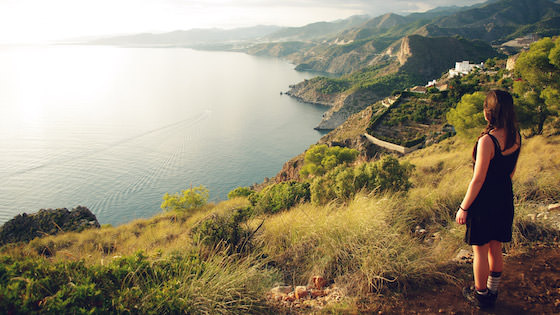
Costa Tropical is the spectacular stretch of coastline that stretches along the coast of Granadaprovince in the “heart of Spain”, AndalusiaThis untouched and relatively undiscovered subtropical stretch, with its beautiful views, is something very special. The area is characterized by a dramatic and striking nature where the mountains plunge straight into the water, forming fantastic bays and beaches.
Thanks to its nature and character Costa Tropical (also known as GranadaCoast, Costa Granada or Costa Granadina) has become very popular with climbers and hikers. People from all over the world come here just to take part in this very special nature. In addition to climbing and hiking, there are a number of other sports and water sports to take part in, not least windsurfing.
Tip. Another area that is recommended as an alternative for those looking for a slightly cheaper (compared to e.g. Nerja, Marbella or Malaga city) accommodation in the sun is Torre del Mar which is growing in popularity. The prices are about the same as on Costa Tropical but it is closer to Malagaairport.
Costa Tropical consists mostly of smaller towns and villages, as well as farmland. What makes Costa Tropical unique compared to other coastal stretches in Spain is Sierra Nevada the mountains that extend all the way down to the sea line. This creates a dramatically beautiful landscape, and here you will find very few (Motril is the only exception) flat zones with concentrated buildings (which, for example, disfigure large parts of Costa del Sol or Costa Blanca).
The climate, which gave the area its name, is unique and has the most hours of sunshine on the European mainland. It is Sierra Nevadamountains that create the unique climate as they capture rain which makes the landscape greener than the neighboring landscapes at the same time as it protects against northern winds. This creates a so-called micro-climate with milder summers and wintersThe differences, depending on which side of the mountain you are on, can be dramatic. For example, when it is a really hot day in the provincial capital Granada, with temperatures of up to 40 degrees, it is “only” 30 degrees on the Costa Tropical.
Educational image from this summer (from YR.no) that clearly shows the difference between Malaga and Nerja, which is only 49 km east of Malaga:
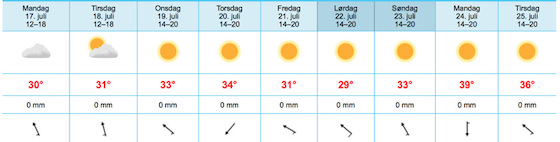
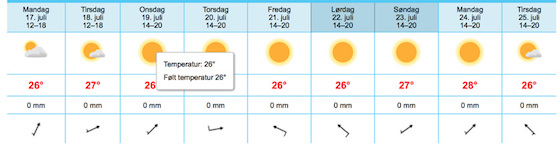
In winter, it is very rare for the temperature to drop below 10 degrees, and it is often up to 20 degrees. The microclimate is recommended by many doctors for those who move south for health reasons. Due to the subtropical climate, it is also only here that the famous fruit Chirimoya (also called “vanilla apple”, which was imported from South America in the 16th century) grows.
Guide to resorts and areas on Costa Tropical
Punta de la Mona is Popular for diving and water sports, and here you can witness fantastic life below the surface as the visibility in the water is magnificent.
Almuñécar is one of the largest cities on Costa Tropical with around 19,000 inhabitants. The city is around 3,000 years old and has played an important role in the history of the Mediterranean area. The cobblestone alleys are numerous and the many peoples who have lived here have left their mark on the city.
Almuñécar is a safe and quiet town and at Plaza Kelibia, the central square, you can enjoy divine tapas with a cold glass of cava. There are a number of beaches in Almuñécar and a seven-kilometer promenade lined with palm trees.
During the winter months, Almuñécarhas a quiet and relaxed nightlife. The pace of the city increases during the summer months and the city turns into a big party.
You will find most nightclubs, bars and restaurants on the beaches and around Plaza Kelibia square.
The restaurant selection is generous and focuses on local dishes, with fish and tropical fruit in town center .
Almuñécar offers a lot of attractions that are well worth a visit, such as the Archaeological Museum, the Sexi Ornithological Park, the Alpujarra mountain range and the beautiful area around Cerro Gordo.
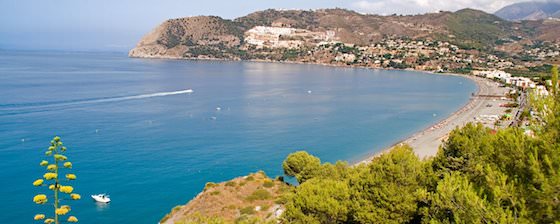
Nearby, and even more beautiful, the village La Herradura – has a relaxed atmosphere even during the summer months (however, the town has year-round tourism and there are restaurants etc. open all year round). As the area is popular for windsurfing and diving, it also attracts a lot of young visitors. However, it is not a “party town” for British teenagers, like for example Fuengirola or Benalmadena on Costa Del Sol .
Here you can stroll in the beautiful Marina del Este or walk one of the hiking trails in the well-visited, and previously mentioned, Cerro Gordo natural park.
Read the guide to Almuñécar and La Herradura.
Nerja – which is a coastal town (the town, which belongs to Malagaprovince, was recently named “Spain’s most beautiful coastal town” in a major international poll) offers incredible beaches and views, such as the view from Balcón de Europa. Here, it feels luxurious to stroll along the promenades made of marble laid in fine patterns. The town is also known for all its superb restaurants, and the seemingly endless range of activities in the form of hiking trails, kayaking tours, yoga schools, etc. Nerja actually belongs to Costa del Sol, but many include the city geographically, and climatically, in Costa Tropical. In a long line of jewels along this subtropical stretch of Spain, Nerja is clearly the crown jewel. Read more about Nerja in this guide.

For those who don't want to play a sport or be active, a visit to the white town Salobreña be worth a visit. The city is divided into two parts. The old town, where the characteristic white houses are located and where the narrow streets lead up to the old Moorish castle, El Castillo De Salobreña. This is the city's main attraction.
Below the Old Town lies the newly built part of the village. The entire town is surrounded by sugar cane fields, which makes it unique.
Here, until 2006, you could see Europe's last sugar cane factory, Fábrica de Azúcar, which is today a museum.
Other attractions worth visiting include the Zoco de Artesanos, a market with local crafts. Here you can watch carpenters, potters, glassblowers and toymakers practicing their crafts. The market is located in the Plaza del Antiguo Mercado.
There is also a night market in Salobreña. It is called Parque de la Fuente and is held twice a week during the summer.
Another of the town's attractions is "El Peñon" (the rock). It is a large rock that divides two of Salobreña's five beaches. It is located between Playa La Guardia and Playa del la Charca/Solamar.
Granada is not part of Costa Tropical but is the capital of the area. Granada is well worth a visit, not least because of the fabulous Moorish palace Alhambra and the magical gardens Generallife. In the Arab quarters you will find good shopping for shoes and clothes and why not stop at one of the many tea houses that are cozy oases day and night. Granada is a fascinating place that has attracted visitors for several hundred years. Read more about Granada in this travel guide.
Costa Tropical housing market – houses and apartments for sale
See our archive with houses and apartments for sale in La Herradura, Almunecar and Salobrena.
Nerja is perhaps the place in all of Spain that attracts the most investors as prices have not yet risen that much since the crisis, while occupancy rate for rentals is sky-high. The only place that really comes close to being as interesting for investors on Costa Tropical is La Herradura (in Almuñécar it is a little more difficult to get a high occupancy rate and there are few attractive homes for sale these days). However, it is most villas for sale in La Herradura, getting a small apartment in good condition here can be quite difficult (although there are some areas with mainly older apartments). Motril and Salobreña do not attract foreign buyers to any great extent at all.
Write to info@spanskafastigheter.se for more information about selling and renting homes on Costa Tropical.
Subscribe to our newsletter with homes for sale in Nerja and the rest of Costa Tropical.