
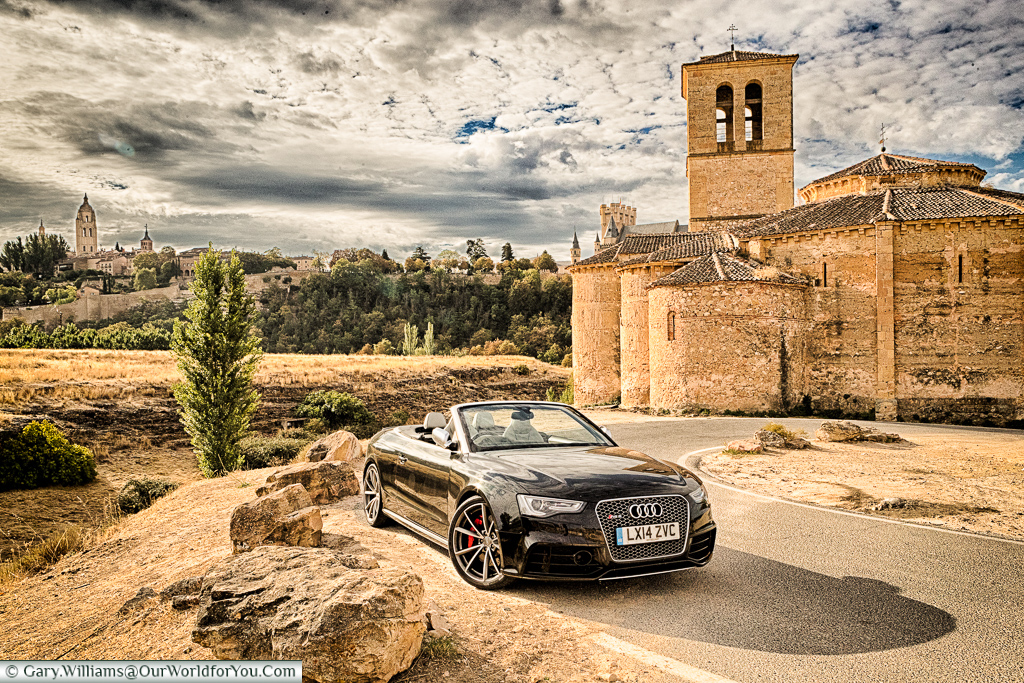
Thousands of Swedes choose to experience Spain by rental car every year. It's easy to see why. Cruising along the coast, for example, Andalusia winding dirt roads through white villages, cultural cities, varied nature with avocado plantations, banana trees, and olive groves, rocky mountains and gentle hills, with the sea as a constant companion, is an experience in itself. However, do not limit yourself to just seeing the coast, there are incredibly beautiful environments to see and culture to soak up in the Andalusian hinterland as well.
Although the public transport connections are well developed these days in Spain, of course there are many advantages to renting a car. Many people may not have time to experience the breathtaking views and need to save time. Not so long ago, it took a long time to get along, for example, Costa del Sol. This is no longer the case thanks to the new motorway. It is also very modern and safe!
Over the past 5-7 years, car rental prices in Spanish cities like Barcelona, Palma and Las Palmas have dropped by 55% (probably even more after the Corona crisis). It is simply very cheap to rent a car in Spain. However, after the pandemic and during the inflation crisis, prices rose sharply, but they have started to fall back to normal.
There are of course lots of companies that rent out cars, but the three car rental companies we mainly recommend in terms of price and reliability are:
- cheap Rentalcars.com
- as well as well-known Holiday Autos
The above companies offer both cheap rental cars and more luxurious options around Spain. There are also good options for rental cars in our article about cheap flights to Spain (several of the listed companies offer package prices with flights and rental cars and Hotel, etc.).
General tips on renting a car in Spain and information about laws
- Avoid renting a car if you are visiting a major Spanish city, such as Madrid, Barcelona, Valencia, etc. It is almost impossible to find parking. Also, expect long traffic jams.
- It is prohibited to use a mobile phone while driving, and it is also not permitted to listen to music on headphones while behind the wheel.
- Speed limits are generally 50 km/h in built-up areas, 90 km/h in rural areas and 120 on motorways. On roads with two or more lanes, the speed limit is often 100 km/h.
- The maximum permitted alcohol content is 0.05%.
- Children under 12 years of age and shorter than 135 centimeters must sit in a child seat.
- The dipped beam must be used in poor visibility conditions regardless of the time of day.
- Cyclists always have priority in traffic.
- If you stop at the side of the highway and get out of your car, you must wear a fluorescent jacket. La Guardia Civil loves to pull over drivers who don't follow this rule. It costs 20% less in fines if you pay directly, which is good to know (in addition, the authorities announced in the summer of 2013 that they will be much more aggressive in following up on the payment of fines, even for foreign drivers).
- All single-lane city streets now have a speed limit of 20 km/h.
- Using a so-called radar detector can now result in a fine of as much as €500.
- Translation of different types of gasoline in Spanish: Lead = super or super 98, Unleaded = Sin plomo or Eurosuper 95, Diesel= gasoleo.
- Do you have a disability card for parking? It is also valid in Spain.
- Rush hour traffic in Spain is a little different because of the siesta. So, there are four times of the day when traffic is at its worst. 8 to 9:30 in the morning, 12:30 to 14:30, 15:30 to 17 and 18:30 to 20:30. The quiet period usually falls between 15 and 17. Also, keep in mind that the coastal roads during the holiday season (especially in August) can get very busy at times.
- If you have your arm, or even just your hand, outside the box, you risk a fine of €100
- If you drive barefoot or in flip-flops, the fine can be €200.
- Be very careful when parking your car at a beach . If the area is classified as protected, you can be fined up to €6,000.
- In many small Swedish towns, locals, including the police, are tearing their hair out in despair as there are no direct measures against people driving around at night and playing loud music. In Spain, however, the police have the power to issue on-the-spot fines of up to €100 if you play loud music in your car early in the morning, or drive past a quiet area such as a hospital.
- If you have the car stereo on while you are refueling your car, you can be fined up to €91.
Latest changes in Spanish traffic laws that may be good to know
From 1 January 2026, emergency lighting devices that replace warning triangles must be able to connect to digital platforms. This means that most warning lights that motorists have purchased so far will soon become invalid. According to the Spanish traffic agency DGT, traditional warning triangles will disappear completely, and instead V-16 lights, small yellow lights that are placed on the roof of the car without the driver having to get out, will become the new standard. This will reduce the risk of accidents, especially on motorways where drivers have been at risk of being hit when placing triangles, reports El País.
The challenge, however, is that many V-16 lamps sold today lack the mobile connectivity required to connect to DGT's digital platform, DGT 3.0. This connectivity will become mandatory from 2026, meaning that most lamps purchased today will soon be unusable. The rules also affect rental cars — so if you rent a car as a tourist, you should check that the car has this equipment or that the rental company informs you about it.
From January 2024, all existing electric scooters and other personal transport vehicles (PMVs) in Spain must be approved in accordance with the latest regulations published by the Directorate General of Traffic (DGT) in order to be able to legally drive on the roads.
All PMVs marketed from January 22, 2024 must be certified brands and models and will be listed on the traffic authority's website.
125 new road signs were introduced starting in 2023.
As of 22, you should be aware of the following new traffic regulations: Electric bicycles, scooters and similar vehicles are no longer allowed to drive on sidewalks. Scooter drivers must also wear a helmet.
The speed limit on Spanish roads was lowered to a maximum of 90 kilometers per hour from 2019. From 2020, the penalty for talking on a cell phone while driving was further tightened.
Some new rules were introduced a few years ago, with the aim of fully harmonizing with EU laws. However, these are mostly aimed at professional drivers. It is worth knowing, however, that individuals suffering from sleep apnea will not automatically be disqualified from driving, provided they have a certificate from a doctor. Another major change in the regulations concerns fatal accidents. The costs of medical examinations and autopsy are covered by the Spanish state from 2016 onwards.
- All cyclists under 16 must wear a helmet. If not, the guardian will be fined 200 Euros.
- When a car overtakes a cyclist, the cyclist must have a gap of at least 1.5 meters between their car and the cyclist. If this is not possible, the driver must wait for the road to widen.
- Foreign residents must now register their cars in Spain.
- The police and Guardia Civil will be given the right to issue fines remotely, meaning they will not have to chase down a vehicle that is breaking the law to issue a fine.
- It is no longer permitted to drive vehicles with a driving ban out of the country.
The three best road trip destinations in Spain
According to Auto Europe, the three best destinations for a driving holiday in Spain are:
- Merida, which is the capital of the Extremadura region. There is a lot of history and culture here, and the beautiful landscape is perfect for a drive!
- San Sebastian, which is primarily known for having the most Michelin restaurants per capita in the world. It also has plenty of clean beaches and hiking trails.
- Malaga, which is a city on the rise. The road network in Andalusia is also very modern and it is easy to get around. Don't miss coastal pearl Nerja while you're still nearby!
- Read also:
- Wikipedia about Spanish motorways and signs. Article about our range of housing in Spain
- About apartments and house for rent
- Do you have any experience regarding car rental in Spain that you would like to share? Leave a comment below.