

Granada is a city that everyone should visit at least once, as it offers an abundance of history and culture, and its character is unique in the world. Nerja may be the favorite of investors and vacationers, but Granada is the great jewel of historians.
Granada, which is the capital of the province of the same name, is located in Andalusia region, has around 240,000 inhabitants, of which nearly 60,000 study at the prestigious university. The young population, combined with the old heritage, creates a vibrant city full of dynamics and contrasts.
In this travel guide, we go through attractions, tapas, tips on what you should consider in general, where to avoid booking hotels, flights and rental cars, the weather and a review of the housing market, as well as a little bit of other stuff that might be good to know.
Nightlife and tapas in Granada
Granada's nightlife is a nice combination of relaxed and hectic. It's a good idea to start a night out with a trip around the bar streets for tapas and then continue with a pub crawl. Many people round off the evening afterwards, while others end with a visit to one of the city's many nightclubs. The range of entertainment venues is very large, thanks in large part to the large number of students.
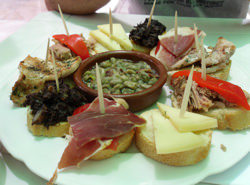 Granada is widely known for its tapas. In the city, it is still customary to get a small plate of food for every glass of wine or beer you order. This could be, for example, a bowl of salted almonds, olives, Serrano ham, garlic prawns or a small portion of Paella. You often get them without ordering anything to drink, but Granada is one of the few places in Spain where you always get free tapas with your drink.
Lunch in the city is served between 13:00 and 16:00. Dinner from 20:00 until after midnight. The best and cheapest way to eat is to go on a tapas tour. We recommend starting from Calle Navas, at Plaza del Carmen. If you are brave and in an adventurous mood, try the local specialty Tortilla Sacromonte, which is a spicy omelette with pig's brain and other organs. More appealing specialties include Berenjenas fritas (fried eggplant), and habas con jamón (green fava beans with pickled ham).
Here you will find all kinds of cheeses, sausages, meat dishes and seafood. Other culinary delights to discover are the city's tea rooms, that is, tea bars, which are somewhat unique to Granada. Don't miss out on the many delicious maro-style treats!
Tip:
Festivals and concerts are held all year round. The best is the International Dance and Music Festival held from late June to early July. Concerts with classical music, flamenco, ballet, and opera are held every night in different historical monuments (such as the Alhambra).
The best way to experience the city is on foot. We recommend “Cicerone” which organizes walking tours of approximately 2 hours. Found at Plaza de Bib-Rambla. Tourist office otherwise found at Calle Virgen Blanca, 9, 18071.
Look out for the women who hang around the cathedral and Alcaicería. They will bring you a twig, which is free, but then they will grab your hand and want to tell you a fortune for a little tip. They will then want at least 5 euros for this. In general, be aware of pickpockets around the big monuments.
Attractions Granada
The Alhambra Palace, the Fuente Nueva, Carmen de los Mártires and Zaidin gardens, the old town (Albaicín) and the cathedral are just some of the attractions that Granada can boast of.
Alhambra is the main attraction. The palace, which is located on a hill above the city, was built in the 14th century and is perhaps the best-preserved building from this period in the world. In fact, a couple of years ago, the Alhambra came close to being included in the list of the new wonders of the world. The palace is also Spain's most visited monument.
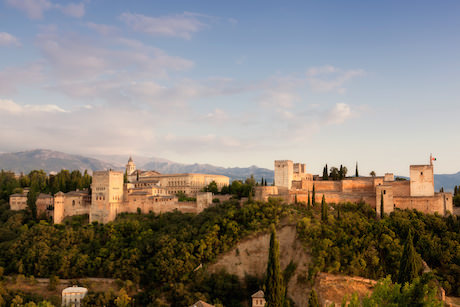
After the Alhambra is Albaicín, the old Moorish city, the most important attraction. You can't miss the cathedral either. Here Ferdinand and Isabella, who unified Spain, are buried.
Shopping in Granada is excellent and you can choose between strolling around quiet pedestrian streets or visiting one of the larger shopping town center . Puerta Real is the area for the best shopping in Granada.
The city has Spain's best selection of goods from Maroand other parts of Africa. Here you will find good prices on goods such as tea sets, leather, clothes and carpets. Sale periods occur in January, July and August. Look for the "Rebajas" sale signs.
History of Granada
The area of present-day Granada has been inhabited since around 600 BC. Until the arrival of the Moors in 711 AD, the Phoenicians, Iberians, Romans and Visigoths ruled the area in turn. Under Moorish rule, Granada grew into an unparalleled flourishing city and was town center of the Moorish empire in Spain. The city was the Moorish city that resisted the Reconquista (the Christian reconquest of Spain) the longest. This had to do with its strong fortifications and natural protection from the mountains. In 1492, however, the Moors' time was up and Ferdinand II of Castile incorporated the city into the central government.
Public Transport Connections and Flights to Granada
- Granada has its own airport, Federico García Lorca Granada-Jaén. It is quite small and the only international connection is to London. Most visitors to the area land in Malaga. Read about how to get cheap flights to Malagaamong other places.
- Public Transport Connections in and around Granada are excellent with motorways in all directions. Granada also has good train connections to other cities. From 2022 it will only take one hour and 10 minutes by high-speed train between Malaga and Granada. Approximately 2 departures per day. Granada also has a newly built metro system, which is unique for a city of Granada's relatively small size.
- It is easy and convenient to get from, for example Nerja or Malaga on Costa del Sol to Granada. The journey from Nerja to Granada by car takes about an hour via the A-7 and A-44. There are also buses if you prefer. Tips on cheap rental cars in Spain (as well as traffic rules etc.)
Hotels in Granada
You can see the most important sights in one day if you plan well, but at least 2 days and 2 nights are recommended to really take in everything the city has to offer.
Hotel prices are at their most expensive (hotel prices go up by 10-20%) in April, May, September and October. But apart from Easter week, prices are still good. During July-August when the city is so hot that the sun sweats, hotel prices drop.
Tip: Avoid hotels around the Alambra and Albayzín as they cost unnecessarily much per night. It is admittedly difficult (read impossible) to drive in the historic parts of the city. We do not recommend arriving there and looking for a hotel at random. Book a hotel that has a parking garage (or ask the hotel to recommend the nearest parking garage) in advance. To book a hotel, we always recommend hotels.com because of their wide selection and low pricesThey also have villas and apartments for Long Stay.
Weather in Granada
Granada has a dry and warm climate with an average annual temperature of around 15 degrees. During the summer months the city is bathed in sunshine and it usually gets really hot in both July and August. The best time to visit is April-May and September-October when the weather is most pleasant.
The housing market in Granada and the surrounding area
The charm of the city and the area attracts many visitors every year, but it is still not very common for foreigners to invest in a property in this part of Spain. However, there are a lot of (not least bank repossession ) cheap apartments and houses in both central Granada and in the nearby mountain villages in Sierra Nevada. Often the prices of housing here are significantly cheaper than on, for example, Costa del Sol.
If you are primarily looking for an investment for rental, Granadais not recommended. However, it is a very good province to look in if you are looking for cheap renovation project (finca) in somewhat secluded, rural environments.
Write to info@spanskafastigheter.se and tell us if you are looking for a house or apartment, and where.