
Our head realtor Anders Larsson is more Spanish than Swedish after 20 years in Spain. He has traveled all over the country and finally settled in Spain's cultural hub Andalusia. One of his absolute favorite destinations of all in the region is the beautiful old city of Córdoba.
In this travel guide we will go through entertainment, history, sights and climate, among other things. The city is a perfect excursion destination for those who live in, for example, Nerja or Malaga during your stay on Costa del Sol. It is definitely worth a night or two too. We usually go with hotels.com which has a good selection and price guarantee.
Cordoba Travel Guide
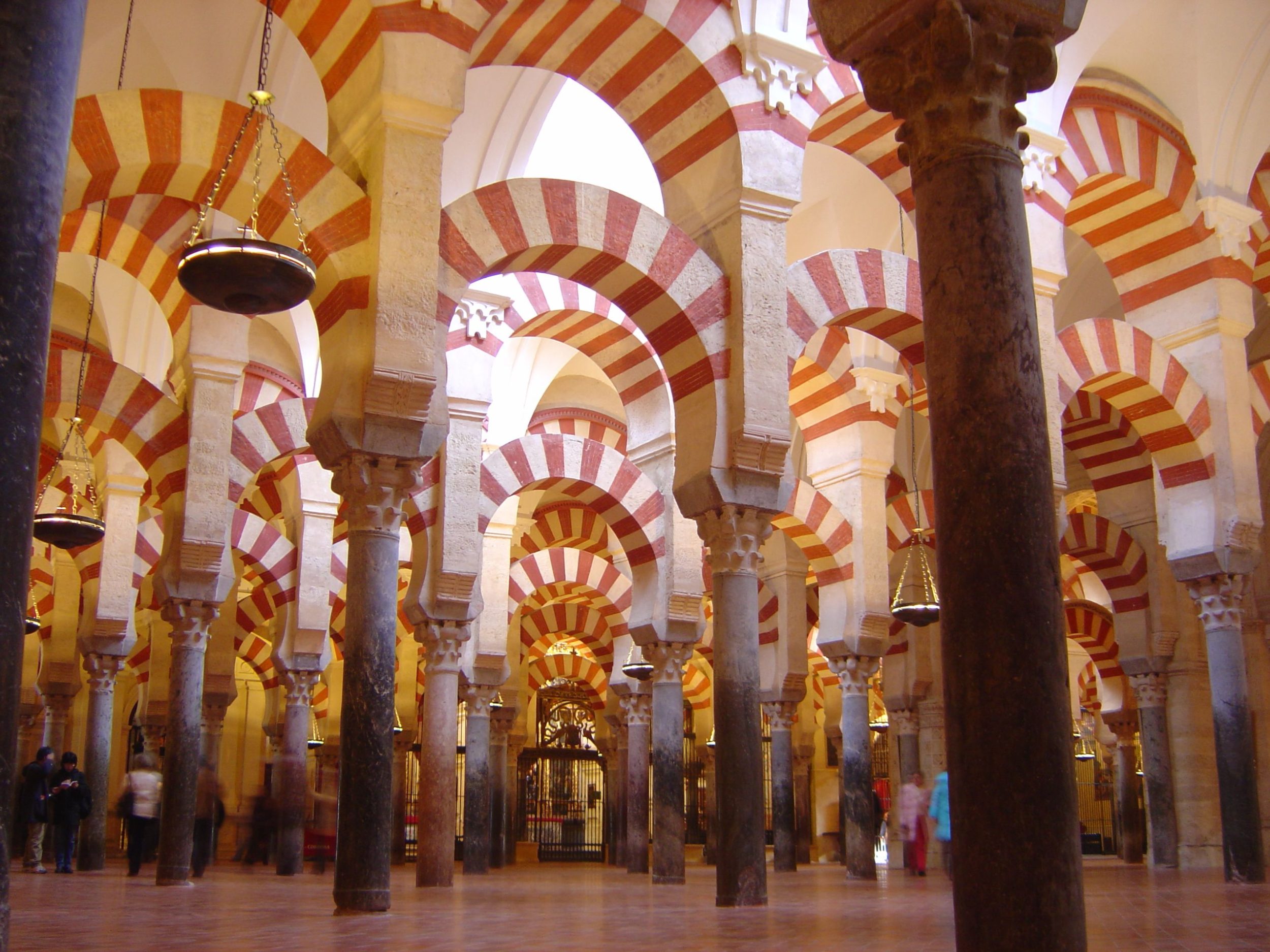
Córdoba is located about 130 km from Costa del Sol a bit inland in the region Andalusia. The population is around 320,000, which makes the city a medium-sized city in today's Spain. However, around 1,000 years ago, Córdoba was one of the largest and most influential cities on the planet. Córdoba is best known for the Mezquita cathedral, but the city offers much more than that.
Nightlife and food in Córdoba
The city has a strong pulse, with good shopping. Córdoba has a very varied entertainment scene and there is something for everyone. Everything from hot nightclubs to cozy teterías (cafes serving tea and delicious pastries) and everything from generic Irish pubs to traditional Andalusian tapas bars. The entertainment options are relatively spread out in the city, but the old quarters by the river are something of a “hotspot”.
The month of May in Córdoba is synonymous with 14 days of life-affirming festivities. During the Feria de Córdoba, locals hardly sleep a wink and are busy having fun more or less around the clock. Córdoba’s “feria” is widely known. Almost as famous is the city’s Easter week and Córdoba can of course also boast its very own carnival.
The city is a very good city for food lovers. The area is best known for its hams and olives, and not least Salmorejo, a thicker version (eaten with a spoon) of the tomato soup Gazpacho. Salmorejo is usually served with hard-boiled eggs, bread and ham.
Most restaurants and bars serve white wine from the nearby Montilla-Moriles region.
A local favorite restaurant is located east of the Mezquita (see below) and is called Bodegas Campos. There is a slightly more formal and expensive restaurant upstairs in the building, but the best food is downstairs where the atmosphere is more relaxed.
Attractions Cordoba
A large part of Córdoba is classified as a UNESCO World Heritage Site and it is easy to see why. The historic quarters are strikingly beautiful and cozy with their narrow alleys, square squares and old buildings. It is in the middle of the historic quarters that Mosque, which is perhaps the world's most beautiful religious building, is located. The Mezquita began construction in 786 as a mosque, but since 1236 it has functioned as a church.

For a glimpse into another world, another time, untouched by tourism and modern commercial forces, wander into the area east of the Mezquita. Here the streets are narrow, the walls of the houses are thick and whitewashed (natural protection from the sun) and the doors and windows are colorful (as a way of adding pops of color to a city of all-white buildings).
Some of the highlights of the old town are the Roman bridge, the fort Alcazar of the Kings dating back to the 7th century and the Jewish synagogue. A landmark in the newer part of the city is the Cristo de los Faroles square, which in the evenings offers an almost surreal and magical play of light around a crucifix.

Córdoba is famous for its patios, its beautiful courtyards. When you walk around the city and see bars and restaurants from the outside, they don't look like much to the world. But behind most establishments hide enormous and beautiful courtyards. These courtyards have their roots in Roman times and survive as cooling oases even today. During the May Festival every year, all the courtyards are opened to the public and there is a competition to see who has the most beautiful courtyard. During this time, the city is characterized by flamenco that accompanies the visual and aromatic party (the city smells of jasmine and orange, and all kinds of flowers in May).

Cordoba – history
- There is evidence of settlements in the area as far back as 40,000 BC, with remains found dating back to the Neanderthal era.
- The recorded history of Córdoba begins with the arrival of the Romans. When the Romans arrived in the Iberian Peninsula, it was the area of present-day Córdoba, mainly due to its location right on the great river Guadalquivir, which they chose as the capital of their province of Hispania Ulterior Baetica.
- After the fall of Rome, a period of turmoil followed and the city had several lords. In the latter half of the 7th century, the Moors arrived. In many other cities on the Iberian Peninsula, the Moors were welcomed with open arms, but not in Córdoba, and the Moors had to take the city by force. After the Moors arrived, the city flourished and around the year 1000, Córdoba had close to half a million inhabitants.
- Andalusia is one of the most popular travel destinations among Swedes. It has been like that for longer than you might think… In fact, as early as the 9th century, the Vikings were enchanted by the beautiful landscape and settled there, producing, among other things, cheese that was sold to Córdoba and Seville. Later, slaves were also sold to these cities. In Frans G Bengtsson's classic about the Vikings, "The Red Serpent," the main characters are captured by the Caliph al-Mansur in Córdoba.
- The city had a huge library and it is said that there were around 3000 mosques. For a long period the city was a scientific and cultural beacon. Many thinkers, and many inventions eventually influenced the leading figures of the European Enlightenment.
- After the flourishing era, a long period of negative development followed, and by the middle of the 18th century the population was a modest 20,000. It is only in the 20th century that Córdoba has regained some of the glory of its heyday.
Public Transport Connections , weather, and other facts
Córdoba does not have its own airport and the largest international airport nearby is the one in Málaga . Public Transport Connections between Málaga and Córdoba are exemplary by train and car. Córdoba otherwise has good public transport connections with the outside world. Among other things, the city has high-speed train lines to both Madrid, Barcelona, Seville and Zaragoza (it takes under an hour from Málaga with the new train, AVE).
Weather in Cordoba
Córdoba boasts the highest average daily temperature in Europe during the summer months. Directly translated, this means that the sun bakes the city's streets between June and September. It is not uncommon for temperatures to reach 40 degrees in the shade and rainfall is minimal. At the same time, it can actually get a bit chilly at night. February-April and October-December are significantly cooler months.
Buying a home in Cordoba
It is unusual for us to receive inquiries about houses or apartments for sale in Córdoba, but we work closely with a major Spanish bank that has a large selection of houses and apartments in the form of bank repossession . We also work with the province's largest promoter who has a wide selection of newly produced properties for sale in and around Cordoba. If you have any special requests regarding housing in or around the city, our head realtor Anders Larsson can draw on his contacts and find the right one for you without major problems. Write to info@spanskafastigheter.se for more information about homes for sale in the area.