Seville is the largest city in the autonomous the region of Andalusia. With its approximately 1.5 million inhabitants and suburbs, Seville is also the fourth largest city in Spain. If Granada has the unique Alhambra palace, and Cordoba its remarkable Mezquita, then Seville has soul – “duende”! This duende is fundamental in the Flamenco dance that permeates the entire culture of the city!
Seville is a modern city, which has undergone a fantastic evolution in the last 10 years, offering several exciting later architectural masterpieces, but the culture is firmly rooted in its strong history. People still dance here with the same passion as a Don Juan or Carmen. Bullfighting is still politically correct, and little girls dream of becoming Flamenco dancers when they grow up. Seville is the historical and cultural heart of Spain. Or as James Michener put it, “Seville doesn’t have atmosphere, IT IS atmosphere.”
According to the world's largest travel magazine Lonely Planet, Seville is the best city in the world to visit in 2018:
Seville has bloomed into a city of bicycles and trams, keen to reinvigorate its artistic past. The metamorphosis hasn't gone unnoticed. The capital of Andalucía will host the 31st European Film Awards in 2018, and showcases its good looks in the TV fantasy drama Game of Thrones.

Seville is one of the cities in Spain with the longest history. Founded by the Romans, adorned by the Moors and enriched by the gold of Columbus, Seville is a unique city not only in Spain but in the entire Western world.
In this travel guide we go through the best sights as well as tips on accommodation and flights, and take a look at the housing market in Seville. Seville is an excellent day trip destination for those visiting, for example Nerja or Malaga on Costa del Sol, but we recommend at least 2 nights and 2 full days to get everything done.
Nightlife Seville
Seville is almost synonymous with a hectic and wonderfully vibrant nightlife. The almost constant sunshine seems to turn both locals and the countless crowds of tourists into party animals. The nightlife is hectic all year round with bars, clubs and restaurants that don't like to close before sunrise, and a must when visiting the city is of course to see an up viewing with traditional flamenco music and dancing.
At Easter, the entertainment scene in Seville escalates into an inferno, with the two festivals Santa Claus and April Fair as highlights. During both of these festivals, Seville is perhaps the world's entertainment town center . If you are going to visit the city during either of the festivals, you must make sure to book accommodation well in advance.
Accommodation Seville – hotels and apartments
Seville, strangely enough, has less than 3 hotels per 10,000 inhabitants, despite over 1.5 million people visiting the city every year.
Hotel prices double during the 2 big festivals. Overall, the most expensive months are April, May, September and October. When the city turns into a furnace, in July and August, hotel deals are plentiful. But even November (which is a great month to visit!) and February are cheaper to stay in Seville. You can find the best selection and prices for hotels on Hotels.com. They also have houses and apartments for rent.
Rent bank repossession in Seville. In the city and its immediate vicinity, the La Caixa bank, with which we collaborate, has around fifty properties for long-term rental. The cheapest monthly rent at the time of writing is 275 Euros for a 2-bedroom apartment. Typically (if you rent privately) you can expect to pay around 600 Euros a month for a 2-bedroom apartment in the central part of the city. Write to info@spanskafastigheter for more information about renting a property in Seville via bank.
Attractions Seville
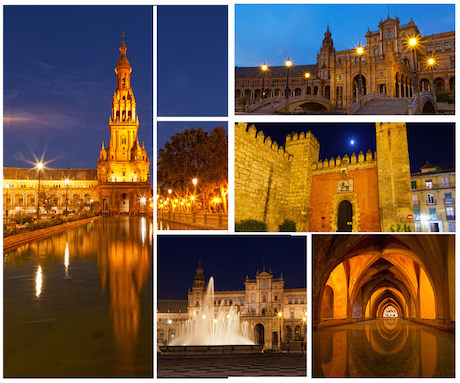
The whole of Seville is a cultural and historical attraction in itself. When walking through the city, there are many old buildings to discover, most of which are very well preserved. One place you should not miss is the old town. There are three fantastic monuments here, namely Seville Cathedral with the bell tower La Giralda (measuring 104 meters) and Alcázar PalaceThe cathedral is gigantic – in fact, it is number three in the world in terms of size. Here you can see, among other things, the tomb of Columbus.
The Alcázar Palace is a royal palace that was originally a Moorish fort. Today, the palace is a monument to the Moorish knowledge and sense of architecture, and it is a powerful experience to stroll among the buildings and park areas.
Also stroll along the Guadalquivir riverbeds and cross the Isabel II Bridge to reach the cathedral and the Torre del Oro (a watchtower built in the 14th century).
Like many other cities in Spain, Seville is also a city crazy about football. Seville is home to both Sevilla FC and Real Betis. Both clubs are big and steeped in tradition and a match at Ramón Sánchez Pizjuan (Sevilla) or Benito Villamarín (Real Betis) is something you shouldn't miss. The local derby is ranked as the hottest in the Spanish league.

Shopping Seville
Seville also offers excellent shopping, with the squares Plaza Nueva and Plaza Duque de la Victoria being landmarks to look out for.
Smaller shops close on weekdays between 1:30 PM and 4/5 PM. In the city you can find everything from art and clothing to crafts, jewelry and Flamenco clothing (a real Flamenco dress costs around 2,000 SEK).
Eating in Seville
- When it comes to the range of good food, suffice it to say that Seville is one of the best cities in Spain when it comes to tapas…
- Generally, restaurants serve lunch between 1pm and 4pm, and dinner from 8pm (the Spaniards themselves don't go out to eat until 9pm at the earliest). The Mañana approach to life among the Sevillians, taking everything slowly and not worrying about worldly inventions like clocks, is not least manifested in long, drawn-out lunches. People are happy to sit and chat and eat for a couple of hours. At least.
- Try the cold soups Gazpacho Ajo Blanco, and fried fish, such as marinated adobo. If you want to try a plate with a little different types of fish, order the “frito variado”.
- Recommended drinks with food include fino (chilled, dry sherry) or Tinto de verano (a wine drink similar to Sangria). The most popular white wine is Barbadillo, and when ordering red, Rioja is of course the go-to.
History of Seville
Seville is one of the oldest cities in Spain. The city was founded during Roman times and was one of the most important cities north of Rome during the Roman Empire. After the fall of the Roman Empire, both Vandals and Visigoths (Germanic people with presumed roots in Scandinavia) arrived to become the city's masters, but it was the Muslim Moors who put Seville back on the map.
Under Moorish rule, Seville was a very prosperous city and much of the Arab world's influences on the West (including our number system!) came via Seville.
In 1248, Seville was incorporated into Castile (part of central Spain) and the Moors were expelled. Then followed a period of relative calm, until Columbus discovered the New World, that is. For about 100 years, Seville was the leading port city in the world and endless wealth flowed into Europe through the city. From Seville's great river port, explorers such as Amerigo Vespucci and Ferdinand Magellan set out on the world's oceans to find new sea routes to the riches of the New World, such as gold, silver, tobacco and cocoa.
Flights and other public transport connections
Seville's airport is called San Pablo Airport and is the second largest in Andalusia. The airport is located about 10 km east of Seville's city center. There are no direct flights from Sweden, but you can fly to Málaga with both regular and low-cost airlines. Tips for cheap airplane seats to Spain.
Since the World Expo in 1992, the city has had an impressive infrastructure. With the AVE high-speed train can you leave from Madrid in just 2.5 hours! At the time of writing, there are trains to the capital every hour between 07:00 and 23:00. There are also both express and regular trains to nearby Córdoba (45 minutes as the fastest) and Malaga (2 hours) and Ronda, among others. Please note that in terms of multiple departures, the Avant trains are as fast as the AVE, but significantly cheaper.
The city also has two bus stations, El Prado and Plaza de Armas. Bus to Tarifa takes about 3 hours, and to Ronda 2-2.5 hours. There are 6 buses a day to and from Malaga, with connections to Nerja.
If you have rented a car and are driving into the city, follow the signs for centro ciudad ( town center ) and drive along the river. Most hotels charge about the same for parking as they do for parking garages. If you want to make it easy for yourself, park at the first available parking garage and take a taxi to the hotel. Also, beware of fake parking attendants who will guide you to illegal parking lots. Tips on good companies when renting a car in Spain.
The rivalry between Sevilla and Malaga has long been very strong. When our realtor moved to Malaga in the 90s, he remarked that there were no signs to Seville from Malaga, and vice versa (this has changed now, fortunately!). But it is a quiet and nice road on mainly the A45 and A92, and the drive takes about 2 hours.
The city is very well adapted for cyclists, and several cycle paths wind through the city. There are lots of bikes here and there that you can rent through the municipality.
Weather in Seville
Seville, like Andalusia as a whole, has a warm climate. According to standard climate classifications, the city has a subtropical Mediterranean climate, which means that it is warm almost all year round. Sometimes Swedish summer temperatures also prevail during December and January. The summer months are usually very hot, with temperatures reaching and exceeding 40 degrees.
Houses and apartments for sale in Seville
There are several bank repossession here, both houses and apartments. Prices fell sharply during the crisis and several unfinished house skeletons stand as sad monuments to the hard years of the crisis.
Bank repossessions in the area are relatively cheap, but they are often renovation project . The cheapest property at the time of writing is a townhouse in the north of the city ( year of construction 1920) with 2 bedrooms for 7980 Euro! It goes without saying, however, that to get up to a turnkey standard you need to increase your budget by a few tens of thousands of Euro.
Are you interested in buying a home in Seville and the surrounding area? Write to info@spanskafastigheter.se and we will get back to you with a report on the most affordable bank properties right now. A rule of thumb is: the closer to town center of Seville, the more expensive the home.