Madrid is the capital of Spain and by far the largest city in the country. In Europe, only London and Berlin are larger in terms of population. Madrid is a modern city with a strong economy and a wonderful range of entertainment and attractions.
Nightlife Madrid
Madrid has a superior entertainment scene with something for even the most discerning visitor. For lunch and dinner, all the world's cuisines are represented and there are few cities in Europe that have as many Michelin-starred restaurants as Madrid.
For evening and nightly entertainment, Madrid is a Mecca, and this is true every day of the week. Bars and pubs are on every street corner in most neighborhoods and nightclubs are numerous. A little special about nightclubs in Madrid is that you don't always have to pay an entrance fee. Another aspect is that most self-respecting clubs don't open until midnight! The party goes on in most places all night, until the offices open in the morning. If you're up early and walking along the city streets, it's hard to know who has just started their day, or who is about to end it..
Many Madrid residents like to walk around their city. These Madrileños enjoy strolling along the city streets, the whole family including strollers, even after midnight. In classic Spanish fashion, you chat with people, greet neighbors and have a tapas and a small beer at bar after bar after bar. Good places to experience the city include Gran Via (from Plaza de Callao to Plaza España), from Puerto del Sol to Plaza Mayor and down Calle del Arena, until you reach Plaza de Isabel II. Walk along the pedestrian street Calle de las Huertas from Plaza Mayor to the Prado. Here you can also do some serious window shopping.
Note, you can find the cheapest accommodation in Madrid via Hotels.com. They have over 600 hotels in their range.
Attractions Madrid

The Royal Palace Royal Palace is a popular attraction in Madrid. The palace is open to visitors and adjacent to it there are a couple of interesting museums to visit.
Puerta del Sol (the Gate of the Sun) is the absolute town center of Madrid and all of Spain (this is where the Spanish road network's 0-kilometer mark is located). The square is an excellent landmark to aim for when exploring the central parts of Madrid. The square has a number of famous statues to take a closer look at.
Prado Museum is another attraction you can't miss. This museum houses some of the world's finest collections of art, with works by Goya, Botticelli, Dürer and Rubens, among others. The museum is located in the so-called Museum Triangle, which includes a handful of different museums.
If you have the opportunity, you shouldn't miss a visit to the football stadium Santiago Bernabeu. Watching a match with over 80,000 other fans is an experience! The Galacticos have been a powerhouse in European football since the first great power era began in the 1950s.
When it comes to shopping, Madrid, as the metropolis it is, has of course a huge selection. Gran Via is the main shopping street in town center . For a little more quirky shopping, the area around Chueca and Fuencarral streets near the university is recommended.
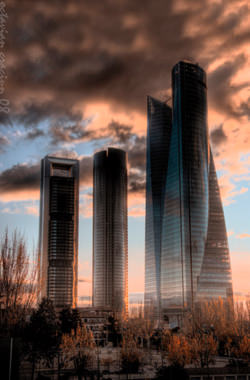 Many people miss the modern “Manhattan” part of the city. In order to take a walk along the skyscrapers Take bus number 27 from the Prado Museum. It goes north along Paseo del Prado, then onto Paseo de la Castellana and then stops at the lovely leaning towers of the Puerta de Europa which are an attraction in themselves. The journey takes around 30 minutes. The metro back to town center takes around 20 minutes. Visit the area at sunset when it is at its most spectacular!
To best experience it old part of Madrid We recommend one of the tours offered by minibuses. Hop on at Sevilla Metro Stop and get off at the last stop, which is the Embajadores metro. Along the way you will see the best of what Madrid has to offer in terms of architecture – but also people of course!
If you like a little bohemian and trendy arean a trip to Lavapiés is recommended, which was long the city's poorest and most neglected area. Nowadays it has attracted people from all over the world, cultural workers and businessmen. There are almost no tourists here either! In addition to lots of tapas bars, there are also many international cuisines here, mainly Indian restaurants.
Bullfighting You can experience top-class Spanish bullfighting at the Plaza de Toros on some Sundays and most major holidays, from March to mid-October. Bullfighting is held almost every day during the San Isidro festival in mid-May. Book well in advance.