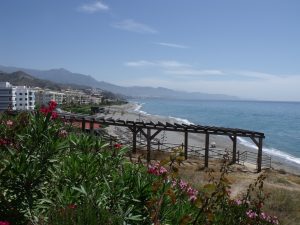
Valencia is Spain's third largest city and the capital of the region of the same name. A quick look at the map shows that Valencia is located on the eastern coast of Spain facing the Mediterranean Sea, just south of Barcelona. Valencia is a vibrant city that is growing every year and the city is truly buzzing with life. For example, it is said that Valencia has the best nightlife in Spain, and that is saying a lot.
Nightlife Valencia
As the regional capital and the third largest city in party-loving Spain, you can easily calculate that the nightlife in Valencia is something special. In fact, Valencia is now known for its nightlife even outside of Spain. In Valencia, people live by the mantra “vivir sin dormir” (live without sleep) and if there is one thing that truly characterizes the nightlife in Valencia, it is that it starts late at night and doesn’t end until it’s almost time to start a new day.
Most of the entertainment is found in the city's old quarter in town center . There are also places to have fun around Valencia's two beaches. No matter where you go, you can enjoy the hospitality that the residents are known for.
The biggest single event on the Valencian entertainment calendar is Las Fallas (Les Falles in Valencian) which takes place between March 15-19 each year. Over the five days, there are huge celebrations and there is really no end to the entertainment on offer.
Attractions Valencia
Valencia has something for everyone. There are cultural attractions galore, a rich entertainment scene and excellent shopping. You can also watch world-class football when the pride of the city, Valencia CF, plays at Mestalla. During their most recent glory period, which lasted from 1999-2004, they won two league titles, the UEFA Cup, a domestic cup trophy, and reached the Champions League final twice (although they lost both). The old 1994 hero Joakim Björklund also played here when the going got tough.
The city's ancient history means that there are some historical sights to see. Most of them are located centrally (Cuitat Vella) on the Turia River. However, most of the attractions in today's Valencia are hypermodern.
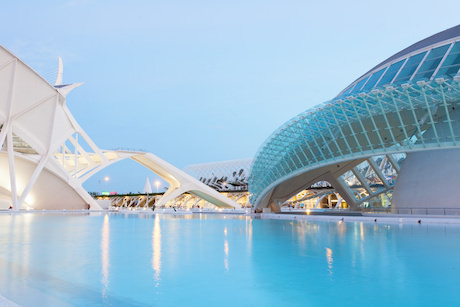
Valencia, for example, is home to one of the largest experience town center in the world, Ciutat de les Arts i les SciencesAlmost in the middle of the city there are cinemas with laser shows, a science museum, a music palace, a botanical garden, as well as the largest oceanographic park in Europe.
History
Valencia's history begins in 137 BC when the Romans established a colony on the site. The colony did not leave any further mark on the history books, but the arrival of the Moors in 714 AD did. The Moors created a prosperous city with large plantations (Valencia is still famous for its oranges today) and the city was one of the most important for several hundred years.
In 1094, El Cid, the conqueror of the Moors, came to Valencia to try to retake the city. He succeeded in this, but it wasn't many years before the Moors returned. The one who finally retook the city was King Jaime I of Aragon.
During the Middle Ages, Valencia was a kingdom, and a very prosperous one. The strength of the kingdom meant that it could oppose the central power. However, this was not popular with King Philip V, who, after the War of the Spanish Succession, when Valencia sided with the Habsburgs, abolished the city's privileges.
As an autonomous region of Spain, Valencia has been self-governing since 1982.
Flights and other public transport connections
Valencia has excellent public transport connections with all modes of transport. The Spanish high-speed AVE trains serve the city (both from/to Madrid and Barcelona) and the city is connected by a large number of motorways in all directions.
Valencia Airport, Aeropuerto de Valencia-Manises, is located about 100 km west of the city's town center . The airport is a base for both major airlines and low-cost carriers, making it possible to fly both regularly and with cheaper tickets to Valencia. Read tips for cheap flights.
Weather in Valencia Valencia's climate is a mix of a subtropical climate and a Mediterranean climate. This means that it is relatively warm (by Swedish standards) all year round. It is only in December-January that the temperature can drop below ten degrees. The swimming season is long and the sea stays at least 20 degrees between June-November.