
Buying a home in Spain can be the best investment of your life, but it is important to choose the right house or apartment in the right area. Costa del Sol for example, has stronger tourism than most other areas. In several places on Costa del Sol thanks to strong domestic tourism, sales records were broken during the second pandemic summer, even though foreign tourism during the period, due to restrictions, fell by 80%. A statement of strength as good as anything for the area, which has only continued to increase since then.
But far from all areas in southern Spain have high occupancy rate . There are also many other aspects to be aware of. For example, did you know that there are strict restrictions (and even stricter rules are being discussed in 2026) for renting in areas such as Mallorca, Barcelona and the Canary Islands? There are also other laws and regulations, which regulates rentals, for most Spanish provinces one should follow to avoid risking expensive fines.
Spanish housing prices, which fell sharply after the 2008 financial crisis, has now reached a crucial point: levels are (in 2026) back to the same levels as just before the crash of 2007–2008. Despite this, most analysts believe that prices – similar to the long-term trend in Sweden – will continue to rise.
The Swedish crisis hit in 1992, driving down housing prices by 20–30 percent. It took the market 6–7 years to recover and return to nominal pre-fall levels. This was followed by one of the world's longest price increases: between the late 1990s and 2022, Swedish housing prices rose by over 500 percent.
It is precisely this long, structural upswing that makes Sweden a relevant point of comparison when assessing the future of other markets that are now in a recovery phase – such as the Spanish one.
Since then, much has also been positive in Spain in the form of regulations aimed at protecting the buyer, banking regulations, and there has been a strong investment in infrastructure, eco-tourism and hiking trails, etc. In the wake of this positive development, several multinational companies have also relocated their offices to Spanish cities, and not least Malaga is experiencing a tech boom after Google's ultra-modern cybersecurity headquarters was relocated to the city a few years ago. As it looks now Will price increase on properties continue to increase in 2026? as inflation falls and interest rate cuts from the ECB lead to lower mortgage rates.
From our Nerjaoffice "We are facing an exciting time in the property market. We expect that supply will remain low while prices will start to increase somewhat faster. The reason is that, in recent times, the sale of listing that have been out for a long time has increased sharply. Behind this is probably a brightening of the economy in Europe at the same time as mortgage interest rates are falling. This creates a dynamic market where, however, there are still opportunities for buyers to make good deals. There are still several sellers who need to sell quickly, or who have put their listing out at a less favorable time (as is well known, the crises have succeeded each other in the last five years and some have been unlucky with the timing). For those of you who are actively looking for a new home, this means an advantageous negotiating position with opportunity to reduce starting prices by approximately 5-15% on most homes. Don't hesitate to contact us for more information about current listing and how we can help you make a smart real estate deal.”
Anders Larsson head realtor Nerjaoffice
Contact us
Do you have any questions or want to book a viewing - let us know.
Spain attracts with lifestyle, stability and global upswing
As Spain emerges as Europe’s leading travel town center by 2026, it will also strengthen its position as one of the world’s most attractive markets for real estate investment. An unprecedented expansion of direct flights from North America, Latin America, the Middle East and parts of Asia is making Spain more accessible than ever – not just for tourists, but also for digital nomads, long-term renters and high net worth buyers.
This global connectivity, combined with political stability, well-developed infrastructure and a climate that allows for year-round tourism, is driving demand for housing in both big cities and coastal regions. Here, investment is not just in sun and quality of life – but in a growing Europe in which Spain now plays the leading role.
Spain will thus consolidate its position as one of the safest and most profitable places to invest in real estate from 2026 and beyond for several reasons:
Stable prices and increased purchasing power
The Spanish property market has experienced stability during the turmoil of recent years, making it a safe investment. At the same time, the increased purchasing power of international buyers has contributed to continued demand.
Growing economy and world-leading tourism sector
Spain has a thriving economy, supported by its status as one of the world's most popular tourist destinations, ensuring a constant demand for housing, especially in attractive areas such as Costa del Sol.
Favorable loan terms
In new development , you also pay the lion's share when move-in and thus don't have to worry about interest. In addition, interest rates will probably be lower when move-in in a couple of years.
Lifestyle and quality of life
Spain is known for its pleasant climate, relaxed lifestyle, and rich culture and gastronomy – a combination that attracts buyers from all over the world.
Infrastructure and connectivity
With modern infrastructure, international airports and top-class transport links, Spain is an ideal location for both permanent residences and holiday homes.
Given the limited supply of attractive used homes, it is an ideal time to invest in new development .
Generally speaking, analysts expect that prices of housing in Spain will increase by over 5% in 2026. If energy prices continue to fall more than expected, as international inflation and interest rates do, the increase will be significantly higher. Never before has international interest in Spain from investors been greater. Nowadays, around 140 different nationalities invest in the country annually.

The construction body APCESpaña believes that it is mainly the desire for new development that is pushing up prices. With the strong international interest, it is difficult to see anything other than a continued upturn in the Spanish housing market. The biggest problem is the lack of homes for sale in the most attractive areas (it is mainly foreign investors who are behind this). This means that prices are very resilient. However, there are many sellers who waited to put their properties up for sale during the pandemic and who are now will accept lower bids than the price for half a year or so.
On the Go 2026:
We expect an exciting market for new development in 2026! With fewer used homes on the market, we see a clear upswing in interest in new development . With interest rates on the way down and banks' increased willingness to lend, the market is starting to move. The price difference between new development and used (which has gone up a lot in price during the year) has also narrowed, making newly built properties extra attractive.
There are some very interesting projects underway in 2026. We don't have concrete prices etc yet, but:
Here are some projects that stand out:
- Nerja: Townhouses and apartments.
- Málaga City: Several projects on the outskirts of the city at better prices.
- Torrox & Torre del Mar: More phases in interesting and affordable project Seaviews.
- Cordoba: Affordable apartments with strong rental figures, perfect for investments.
- Phase 3 Almerimar.: A continuation of a popular project.
In the 5 years before Corona, the value of a Spanish home increased by an average of 5% per year, and if you take into account reduced interest costs and the fact that the price of rentals increased by 50% during the same period, this meant a net return of over 10% for those who bought the right home in the right area at the right time. The value did not decrease significantly, and even increased in some regions, throughout the crisis year of 20. This was a strong finger viewing of the future. In the fall of 21, key-ready apartments were sold on the eastern Costa del Sol where prices had increased by over 50% since they were sold off-plan a few years earlier. We believe we will see similar examples of new development that for sale in 2026 and are completed a few years later.
Foreign buyers account for over 20% of all home purchases in Spain. There are many factors at play, but when it comes to Andalusia, for example, we can point to the major investments in infrastructure, the improvement of beaches and natural parks, large tax cuts and, above all, the international trend of wanting to work remotely in a place with lots of sun (where prices are still considered reasonable).
Since the new regional government of Andalusia took office in 2019, they have introduced a host of tax changes that have effectively reduced, abolished or suspended several tax rates. As a result of this tax-friendly approach, Andalusia has become the region in Spain with the lowest taxes (along with Madrid). It goes without saying that this has encouraged huge foreign investment in the region, resulting in capital growth of 40% from 2019 to 2023. The main explanations for why Andalusia has become Spain’s top property investment hotspot and why so many people are getting rich quickly: 1. Inheritance tax abolished in 2019. 2. Gift tax abolished in 2019. 3. Property transfer tax reduced in 2021. 4. Stamp duty reduced by 20% in 2021. 5. Wealth tax abolished in 2022.
Andalusia is investing heavily in the future! The region received its largest budget ever in 2025, with an increase of over 40% since 2018. The money went mainly to welfare, education and jobs. This investment will continue in the coming years.
– Read more about tax laws you should know.
Sales of new development increased by 50% on Costa del Sol from summer 20 to summer 21. Sales of used housing fell by 4.6% during the same period, which can be explained by the fact that the stock is starting to become old and worn out, but also that prices have only fallen by 0.5% despite the crisis (prices did go up in the autumn, however). Now there has been a period when sales of new development have fallen, but not due to a lack of demand but because many developers are waiting as prices fluctuate greatly and banks set higher requirements during troubled times.
However, it is undoubtedly new development that will apply going forward, but there are still of course good buys to be made for those looking used as well (the starting prices do not change in times of crisis, but the negotiation situation does). Even though most people are now looking for new homes, the supply is limited. Most of the best of the few projects that come out at the beginning of the year will sell out quickly, and there will be a gap (as many developers were low during the crisis) until newly produced homes in good locations come out in 2026-2027 (note that these are off-plan and that move-in will take place no earlier than two years after the start of sales). Also expect that the prices on these will be significantly higher than on what is for sale this year. The sudden price increases during the previous autumn on projects that are not yet completely sold underline this. When things normalize, things will go quickly.
New Development is in focus for investors
One aspect that is completely different compared to the period after the last crisis is, as I said, that the focus in the next 5-10 years will be on new development (although 2026/2027 will probably see fewer new projects than usual). The housing stock is starting to get worn out, and there are many problems with moisture damage (stronger building standards were only introduced in 2006), etc. Despite this, those who own homes built before the 2000s do not seem willing to lower prices significantly. Furthermore, very little new construction was built in the decade after the 2008 crisis compared to the decade before. New construction will thus enter a golden period in the mid- the 2020s similar to that in the early 2000s. Important to keep in mind: The actors who have been active in finding long-inactive plot of land owners (who needed a real crisis to finally sell their coveted plots ) and negotiated good prices for plots in good locations in the middle of the crisis – and which also have a good economy and which have survived the meltdown and retained long-established teams of architects/project managers and established banking contacts are now facing a unique situation. These are the players you should invest in.
There are some very interesting projects coming up in 2026. to get the information before they become public (first we usually send direct mail early in the process to clients we know are actively searching in a certain area, We then publish the projects in the newsletters 1-4 weeks before public release) subscribe to our newsletters. Newsletter west side (Marbella, Estepona. Nueva Andalucia etc.). East Side Newsletter (Nerja, Torrox, Malaga city, etc.).
Investment opportunities after the crises – 2026 and beyond
Spain is expected to be in the winner's bracket as many, including business travelers and digital nomads, will opt out of hotels and prefer to stay in apartments during their stay, while long-distance travel outside Europe will become more expensive with poor frequency of departures, which places Spain in general, and Costa del Sol in particular, according to most analysts, in a very favorable situation in the long term. The capital of the area Malaga ended up at the end of the year thus at Forbes heavyweight list of the 20 best destinations in the world to invest in, and to live in. More major players that have analyzed the future and concluded that Spain is more than worth investing in are Scandinavian investment companies. The largest international portals in Spain are now owned by Scandinavian companies. The most visited Spanish portal Idealista was recently bought for 1.3 billion by the Swedish venture capital company EQT. Even the world-famous investor Warren Buffet, the "oracle of Omaha", has made the same analysis during the crisis and bought a brokerage firm in Marbella. They are aiming long-term and believe in a boom in foreign interest, primarily for Costa del Sol in the next 10 years. Here you will find culture, sun, nature and infrastructure in combination with relatively low housing prices in an international comparison. Many will therefore also choose to work remotely from this particular part of Spain, regardless of where in the world they have their workplace. Andalusia, and especially coastal town of Nerja (which, even in the midst of the crisis, began investing in upgrading nature parks, hiking trails, etc.) and Malaga, and not least the suburb Rincon, have caught the eye. The latter city is investing in further marketing itself to international tourists and investors. Malaga announced in July 2020 that it is now launching “Malaga 2030”, the initiative that will make the city the most attractive place in Europe to “live, work and invest in”.
According to a survey by movingtospain.com, a portal that helps people thinking about moving to Spain, both Nerja and Almuñécar high scores, (and tops the list): 7.5 out of 10. The survey took into account several factors that may be important to prospective residents, including: Average annual temperature, Percentage of pensioners, Property tax, Crime, Access to health centres and Rental prices. The following towns on the top list are: Jávea, Calpe, Benidorm, Denia, Cádiz, Cartagena and Las Palmas.
Interest in investing in Costa del Sol is expected to increase sharply in the US after United Airways tripled the number of direct flights to the area. This is likely to open up new opportunities for American investors to explore the property market and other investment opportunities on Costa del Sol. The US airline has chosen Costa del Sol as the only holiday destination in Spain to which it will fly every day during the high season.
That the willingness to invest from abroad does not only apply to buyers of homes was clear when Google moved one of its most important offices (cybersecurity) to the fastest growing city of all, Malaga, during the year. The city has undergone a significant development that began during the last crisis. It is also believed that Malaga will benefit most from the Spanish state's new arsenal of tax benefits targeted at foreign Startups.
Please note that off-market sales will become even more common after the Corona crisis. These are homes that have been reduced in price but are not put up for sale publicly. This procedure has become increasingly common, and has now accelerated after the Corona crisis. The price reductions on these homes may not be published publicly, but we send them via direct mail to clients who have expressed interest, and who can quickly make a deal. In 2026 at least, this type of deal will be the most common in the most attractive parts of Spain. Note that many have withdrawn their homes from the market, and many others are waiting to sell. There will therefore be fewer homes in the public window, but greater chances of making a A really good buy for someone who is active and can act quickly.
Contact us
Do you have any questions or want to book a viewing - let us know.
We will mention Nerja, east of Malaga, and Malaga City on Costa del Sol many times in this article. There is a reason for that. Nerja has been Spain's most attractive city to invest in for some time nowAfter the first year of the pandemic, figures were also presented that underline this when it turned out that Nerja was Spain-leading at provincial level regarding the recovery of international tourism after the crisis. During the month of October, the city had an occupancy rate of 87.47% in hotels and we have more actual data from this city (along with Torrevieja) than any other city in Spain. Malaga city is the city with the strongest development in the entire Mediterranean region right now. Bookings for private homes in Spain increased by an incredible 1 million already in the first half of 2017, which means an increase of 33% compared to the same period the year before! A couple of years ago, the rental of private homes, for the first time ever, overtook the hotel industry in some areas. The development in Malagacity has been so explosive in recent years that many areas have started to introduce rental restrictions . However, we do not see these restrictions in Nerja or neighboring Torrox.
Many areas in Spain will be affected by the crisis, but Spain is one of the European countries that has fared the best during the economic crisis of 22-24. Perhaps the main reason why the country's inflation, GDP and stock market have not been affected as severely as, for example, the SEuro zone is that it gets its natural gas from North Africa.
The most lucrative area is, as I said, Costa del Sol, and it is new development , due to the lack of new housing in the wake of the long crisis, which is most interesting for residential investors. This applies in particular to areas where there is still interesting land to build on. However, land prices are rising rapidly, and with each new phase of each construction, prices rise. If you are going to have newly produced homes in 2026 or later, buy now, not later. According to a study carried out by AEV, the Spanish valuation institute, significant price increases in housing prices are expected. There are several different factors that point towards this, such as the fact that more and more tenants want to own their own home, that Brexit has finally been signed into law and that most people have now realised that the historically relatively low interest rates are here to stay, while inflation is rising, and Historically, housing has always been a safe haven for investors when inflation rises. Spain is also the country in Europe where the value of housing is expected to increase the fastest and in Spain Malaga is expected to have the greatest growth. Malaga has overtaken Barcelona in terms of the number of newly built homes sold in recent years.
Read our large overview article about new development on Costa del Sol.
Strong increase in tourism in Malagaarea
The province Málagaexperienced a record year for tourism with over 14 million visitors and revenues of more than 19 billion euros, which are the best figures since the pandemic and surpass the 2019 record. Revenues have increased by around five billion compared to 2019.
It is mainly Nerja and Torremolinos that make you beat in 2019 as they raise the average. Nerja has the highest occupancy rate with 94.46% (compared to Marbella and other resorts on the west side which are just over 80%). Nerja also beat all other nearby resorts in terms of occupancy rate , already at the end of 2023 (over 90%).
Although tourism is breaking records in many places in the most attractive areas, it is decreasing in inland areas (note that these areas had a boost during the pandemic, but are now starting to decline in popularity). Even if you do not intend to rent out your home, you should take the rental statistics into account as they strongly correlate with the price development of housing. Nerja became the best city to invest in already during the last crisis, which it came through well and became stronger than before. The resolute action of Nerja municipality with all the offensive investments in hiking trails, natural parks and infrastructure during the pandemic years means that the city is stronger than ever for the rest of the 2020s . We have said it before and these figures make us say it again with extra emphasis. If you are going to invest, do it in Nerja or one of the growing parts of Malaga city (although you should be aware that that particular area does not impose restrictions on rentals).
Different types of opportunities for those who want to invest in Spain in 2026
One of our specialties is finding plots in attractive locations with an attractive price range and then pressure construction prices without compromising on quality or environmental considerations via a proven Spanish project model that is now making a comeback. These are so-called housing cooperative that remove the promoter and their sky-high margins from the equation and lower prices by up to 25%. Read more about housing cooperative in this article.
Several construction developers have moved their headquarters to Malaga as most major investors see the greatest future potential in Malaga and its immediate vicinity. It is mainly value increase in the long term that is interesting, but renting in the right areas in Malaga is on the strongest rise of all areas. Malaga City is also not dependent on strong tourism as companies and lawyers/doctors etc. are looking for accommodation to rent on the market. Between 2013 and 2019, according to the Spanish national bank Banco de España, rental prices increased by 45 percent! They have only continued to increase since then.
Link to our latest homes for sale in Malaga here.
Different types of investments in Spain
- Do you want to buy one or a couple of homes for rent? It is our specialty to find these particular listing and also offer a complete rental solution (including marketing in international portals, helping with licenses, key management, cleaning and administration, etc.)
- Do you want to buy land and build a project with 1-50 homes (including the construction of individual luxury villas)? Our experienced project manager (who has worked on several of our previous and upcoming construction projects) will help you find land, negotiate a good price , and work with our architects to help you design and ensure that the project meets all requirements for obtaining licenses, etc. We will also put you in touch with bank directors for financing and insurance companies for guarantees.
The following article will cover the following points:
- Best areas to invest in Spain
- Best types of homes for a good real estate investment
- Important factors for a successful rental business – and pitfalls
- Restrictions on rentals in the Spanish autonomous regions
- About the types of models rental companies offer and about marketing your home on your own
- This is how much you can earn per year by renting out your home in Spain (with calculation of all expenses and income as well as value increase )
- About borrowing from a Spanish bank
- About the problem (and possibilities) of bank repossession
- About the Spanish housing market – prices are increasing slowly but steadily after the crisis
- Price history statistics
- Summary, about our services and links to further reading
NOTE, the article is continuously updated with new statistics, updates to laws, and other things that concern the topic of investing in property in Spain. We gratefully accept comments, corrections, etc. Write to Info@spanskafastigheter.se

Spanskafastigheter.se operates across practically the entire country and works with most major banks, rental companies/brokerage companies etc. We therefore receive figures from several different players around Spain, but no figures come even close to matching Nerja's figures for rentals. The relatively low prices for housing in combination with the high occupancy rate means that Nerja has the highest ROI (Return of Investment).
It is difficult to say in advance which areas will become new “hotspots”, but the safest thing, as with everything else, is to study history. If you have a documented rental history, you are more secure in your housing investment than 99% of everyone else. We are constantly looking for good areas to invest in, but right here and now, and for a while to come, Nerja is the best place to invest in Spain. Note that there are, however, no homes worth investing in for during €150,000 in the city. However, really good investments generally cost over €150,000 regardless of where in Spain you look.
Like the majority of brokers, we never recommended our clients to count on any major income from renting out their Spanish home. This income was only seen as a pure bonus. However, this was before we received statistics from our own clients (we started in 2008, during the crisis, so it took 4 years before sales started). The figures from this part of Spain are enormous and growing every quarter, and thus 9 out of 10 investors are looking for this city which, for several different reasons, is a uniquely good place to invest in. This does not mean that it is not possible to make a good investment elsewhere in Spain. More about this and more about the rental figures for Nerja (actual figures from various actors), and other areas in Spain, restrictions for rental licence per region, and other pitfalls and tips can be found in this article. First a few words about us from our main broker, Anders Larsson:
At spanskafastigheter.se we focus on finding homes that are good investments both short-term and long-term. They should have a high occupancy rate at market weekly or monthly prices. We have analyzed history from both our own clients' homes, our own rental operations and our partners' statistics from the years before the crisis until now. It is clear that in order to make the safest investment possible, you should invest in a home (or an area) with a rental history that stood strong even during the crisis years. Our goal is to make it as smooth and easy as possible for our clients to successfully advertise for and make a strong profit on their vacation homes. We continuously test and analyze which international and Swedish portals/rental companies give the best results for the lowest possible cost/commission. However, it all starts with finding the right home in the right area at the right priceTo this end, we have banking and legal contacts, as well as other independent brokers, who help us scan the market. They know that our clients are prepared and ready to act quickly when the right listing comes along.
– Anders Larsson, head realtor spanskafastigheter.se Write to him directly at spanienkontoret@spanskafastigheter.se

Link to page where you can sign up for all our newsletters in Spain (Nerja and the rest of the eastern Costa del Sol, Marbella and the rest of the western Costa del Sol).

Link to our Facebookpage (updated 1-2 times per week with particularly interesting listing , etc.)
That's why the potential rental income for a property is so important
A mistake that many real estate investors make is that they only look at the potential value development, and neglect how much/little a property brings in in income per year. Instead, they speculate only on the future value of the home. Warren Buffet, who became the world's richest man through real estate investments, said it best:
"If you focus on the potential price development of the home you are looking at, you are speculating. There is nothing wrong with that. However, I know that I myself am not successful in my speculations, and I am skeptical of those who claim to be successful in the long run with this type of speculation.".
According to customer surveys conducted by Tripwell, 7 out of 10 Swedes rent out their foreign home, in order to cover costs. However, the right home in Spain can generate much more than just covering costs. However, you should be aware that in most areas of Spain, despite its great popularity, it is difficult to achieve a good occupancy rate at all. But with the right home in the right area (and the right marketing via third parties, or in the right portals on your own) you can make a really good housing investment in Spain.
Spain is now considered the world's safest tourist destination, and with many who previously chose Turkey, Greece or Thailand now choosing to holiday in Spain, the country has advanced and overtaken the USA. Spain is now the world's second most popular tourist destination (after France). In 2016, Spain already had 75 million visitors, in 2017 it had 82 (!) million foreign visitors. This was the fifth year in a row that the record was broken. Since then, the record has been broken several times. A big reason why the numbers are increasing so dramatically is that more and more people are visiting Spain during all months of the year, not just the high season. The most incredible thing is that it is believed that the ceiling has far from been reached, and that the changes in the global tourism pattern post Corona will lead to even stronger tourism for Spain.
Another trend is that international luxury tourists have opened their eyes to Costa Del Sol (Costa del Sol). For example, tourism on the Costa Blanca is also increasing sharply, but low-budget tourism still prevails in this part of Spain. The three largest regions for international tourism are Andalusia (mainly Costa del Sol), Valencia and Catalonia. This is followed by the Canary Islands and the Balearic Islands (with Mallorca at the forefront, which is however falling sharply, and TUI reduced capacity there by 30% already in 2019). Special article luxury house and exclusive apartments in Spain.
In 2016, construction accounted for 10% of Spain's GDP. In 2017, it grew significantly, with €1 billion invested in new development on Costa del Solalone. Construction will probably never return to the pace it did in 2007, before the crisis. But there are clearly many construction projects underway from 2026 onwards, and it is speculated that within just a few years, the production rate will reach 400,000 newly built properties per year.
Malagaarea in focus for international film production

Nerja, along with Málaga and Marbella, has become a popular location for film production in the last year, thanks to its beautiful scenery and excellent weather. After a downturn during the COVID-19 pandemic, Málagaregion has seen a strong recovery in the film industry. According to Málaga Film Office and its partners in Andalusia, local production companies have been at the heart of this recovery, but the area has also attracted over 20 British and several German film projects.
Nerja has particularly attracted international interest. American director Tosca Musk, sister of Elon Musk, has chosen the town for the filming of her new romantic comedy 'Wallbanger', calling coastal town "the best place in Europe to film".
Additionally, it was reported before the pandemic that George Clooney and other producers were interested in buying Malaga’s football club, as part of a larger plan to make Málaga the “new Hollywood” of Europe. This now appears to be becoming a reality.
The booming Spanish tourism, good infrastructure and low prices for high-quality housing have made Spain highly attractive to international investors. However, tourism, and the quality of housing, in Spain varies greatly depending on the region, city and neighbourhood. So let's take a closer look at different Spanish areas.
Buying a house or apartment in Spain – good areas
Andalusia – Costa del Sol reigns supreme
The largest international site Spain-Holiday has compiled a list of the 10 most popular locations in Spain for holiday home rentals (note that the lower half of the list has less than half as many requests as top 3.)
- Marbella *
- Nerja
- Calpe
- Barcelona
- Benalmadena
- Lloret de Mar
- Moraira
- Sitges
- Fuengirola
- Almunecar
* Please note that for many people “Marbella” is a broad term that also includes nearby areas, as far down as Estepona. This means that there is a stretch of about 80 kilometers (Malaga to Estepona) where all the towns more or less “cannibalize” each other’s occupancy rate . We have tried to do rental business in Marbellaarea for several years, but it is very difficult to get a high occupancy rate as the area is so spread out, and few can distinguish the different towns from each other. Because the area is geographically vague, there are also not as many repeat guests (repeat guests are the best customers, and we want them to amount to 30% or more of the bookings). One year they live in Mijas, and the next in Fuengirola, etc. Are you going to invest in or around Marbella, invest mainly in the luxury segment in and around Puerto Banus or Nueva Andalucia which is also an excellent alternative. It is a more clearly framed segment. The problem with Banus is that most of the luxury properties that were for sale at heavily reduced prices have been sold. There is still a price difference, even on these most exclusive properties, compared to 2007, but it is not at all as significant. Read an overview of the most affordable purchases of newly built homes on Costa del Sol (updated continuously).
Coastal regions, Costa del Sol, Costa Tropical and Costa de la Luz are the most sought-after areas in Andalusia. These areas are popular tourist destinations during the summer. The most sought-after cities are above all Nerja, which also has a strong winter tourism, (east of Malaga) and Marbella, followed by Benalmadena, Fuengirola (although the latter city has been in decline for a long time) and to some extent Almuñecar (the great interest in Nerja spills over towards Almuñecar). Malaga city is a very interesting alternative on Costa Del Sol (interest in both buying and renting is steadily increasing). Also keep an eye out for new development in the areas between Malaga airport and Nerja. The land is cheaper than other places on the coast and these areas may attract more and more tourists in the next 5 years (more and more people see proximity to the airport as a big plus, and they want to spend their holidays in a fresh, newly built home).
Sign up for our newsletter for the eastern Costa del Sol (mostly Nerja, but also Almuñecar/La Herradura, Rincon and Torrox when something interesting comes up.)
Read more about Nerja here.
Read more about Marbella.
Read more about Almuñecar and La Herradura.
Relatively popular areas around Marbella is between San Pedro and Estepona (and also between Marbella and Elviria), as well as Nueva Andalucia (also known as golf valley) north of Puerto Banus. However, these areas do not have anywhere near as strong rental figures as Nerja or Puerto Banus.
Between Marbella and Puerto Banus, and especially in the central parts of the latter area, prices are significantly higher. However, there are good investments to be made here too, but in higher price ranges.
Our newsletter for the West Costa del Sol (Mostly Marbella and surrounding areas).

Destinations on the rise in Andalusia: Malaga city, Cadiz (such as Sotogrande, Chiclana de la Frontera and Zahara de los Atunes have a promising, but uncertain development). The Huelva area, on the Costa de la Luz, which is also close to the airport in Faro, is also expected to develop strongly with increased tourism. However, we are not yet completely convinced of this. However, the prices in Huelva are the best in Spain right now (in relation to how much close to the beach accommodation you get for the money) and are comparable to the first wave of bank listing that came after the crisis years. A warning finger should also be raised for Benalmadena where there is too much construction in relation to demand right now. The same applies Estepona.
But the big favorite of investors on Costa Del Sol (the fact is that this city has long been number one with Swedish investors, and international investors have also now noticed its potential) is, as mentioned, Nerja, due to very good rental rates and relatively low housing prices. In recent years, it has won or finished high in several international polls. The international attention surrounding the small Spanish town prompted Euroweekly to write "With the awards reportedly judged on the increases in positive reviews, searches and booking interests, they merely demonstrate the growth of the town's appeal..." See the top picks in Nerja right now. (updated weekly). Overview Article new development in Nerja.
If you have your sights set on the areas west of Malaga , you should consider buying a home with a well-documented rental history. Despite tourism breaking all records and only growing stronger on Costa del Sol overall, there are still too many unsold homes in many areas west of Malaga. It is not optimal.
Costa Blanca
The market is growing strongly but revenues are low compared to Costa del Sol (see more in the reported figures further down in the article) as winter tourism is not as strong (although good compared to most other areas in Spain), while there is also a lot of plot of land here, which is pushing down occupancy rate .
In the long run, however, it can be a really good buy to invest in the Costa Blanca, and especially around the city Torrevieja's most popular beaches (avoid the city itself). There are a lot of bank repossession in and around Torrevieja, but these are rarely of a high standard, and are (mal-)located by motorways, etc. On the other hand, a 2 bedroom apartment in a good location costs only from just over a million SEK and upwards, but note that it is becoming increasingly difficult to find good accommodation in a good location in this price range even around Torrevieja. There is also a lot of new construction that is still relatively affordable.
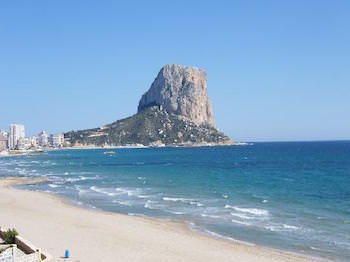
Other popular areas include Calpe, Altea and Denia, although housing prices are higher here and tourism is not as extensive (albeit more lucrative) as in places like Torrevieja.
As for the main cities in the region, Alicante and Valencia, there are still a lot of bank repossession available. However, it is more common for tourists to book hotels than apartments/houses in these cities.
Other areas further south, including the Costa Calida, are more difficult to get a hold of. Above all, it is the lack of flights from Sweden that is a problem. Although there are many untouched and very scenic areas between Torrevieja and Almeria (some areas are growing rapidly in popularity), tourism is basically non-existent for most of the year.
Our top recommendation is this unique project with beachfront location units on one of the last 15 real beach plots in Spain that can be built on. Located in Almerimar.

Read more about Costa Blanca.
Read more about Torrevieja.
Read more about Calpe.
Catalonia (Barcelona, Sitges, Lloret del Mar and Girona)
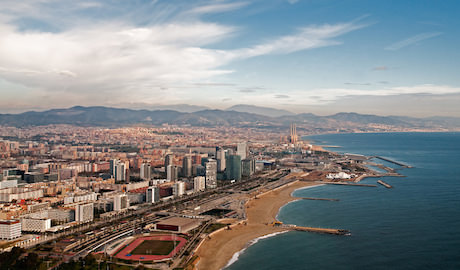
Barcelona is by far the most visited city in Spain. The weather during the winter does not attract tourists, but the pulse of Barcelona attracts all year round. Smaller investors (although the luxury segment and larger investment properties still attract foreign buyers) are avoiding Barcelona at the moment, and it seems that they will do so for a long time. In order to slow down the galloping tourism, the city has decided to completely stop distributing rental licenses for tourist apartments. There is still no date set for when, or if, this decision will be lifted. Since October 2017, there has also been great uncertainty throughout Catalonia due to the great chaos in connection with the declaration of independence. Even if things should calm down in the long run, the damage was already done and hundreds of companies have left Catalonia, such as several major banks and the beer giant San Miguel (which moved its headquarters to the growing Malagaarea).
There are also license restrictions for rentals in popular Girona and Lloret del Mar, and the rest of the Costa Brava, but these are not as strict as in Barcelona. However, we cannot in good conscience advise anyone to invest in Catalonia. Invest in Costa del Sol instead. (most focus on Barcelona and Sitges).
Read more about Barcelona
Read more about Lloret del Mar
Read more about Girona
Read more about Sitges
Mallorca and the Canary Islands
Prices never dropped as much on these popular islands as they did on the mainland, causing most people to browse the supply of bank-repossessed homes.
Please note, however, that there are no bank repossession in the most popular and prominent tourist areas; such as Playa del Inglés, Maspalomas etc. In the Canary Islands, the best choice is to choose a property in a location that has good connections to one of the most popular resorts on Gran Canaria or Tenerife.
Please also note that the restrictions on renting out homes are very strict (and the fines for those who do not comply can amount to as much as €60,000) in both the Canary Islands and Mallorca. This is most likely due to the fact that the strong hotel industry (not least exclusive all-inclusive) resort feel threatened by cheap and easily accessible holiday homes. In Mallorca, it also seems that the laws will be even stricter in the future. The area is not recommended for a property investment, [Update] For some years now, it has been forbidden to rent out private apartments in Palma, and AirBnb has also been banned.
Read more about Mallorca.
Read more about buying a home in the Canary Islands.
What type of property should you invest in in Spain?
These aspects are most important if you want to be able to rent out your home:
How the apartment or villa performs in the rental market (or how much income the commercial property de facto generates) also largely determines how much it is worth in the long run. Don't look so much at factors such as how much it is valued in connection with the loan for the home (the valuation for the bank is these days strikingly often lower than the actual market value), or price per square meter, whose curves look like an ECG over relatively short periods of time.
How much predictable income the property generates is the most important aspect for how a property develops in price over time. Factors such as how long it takes to sell similar properties in the area, how much has been completed in the area, which target group you mainly rent to (the low-budget segment and the most expensive segment are the least stable target groups), the stability of the rental company (are there alternatives if it goes bankrupt?), etc. also affect property value growth .
Important factors for renting:
- Sea View is not a must, but a big plus in most cities. Terrace or balcony is desirable (especially if you are marketing to Scandinavian tourists).
- 1-3 bedrooms. The most popular accommodation types, in terms of international tourists' reference , are 1. Villa. 2. Apartment 3. Townhouse. 4. Penthouse. 5. Country Housing 6. Studios (but they should have a kitchenette/kitchen). When it comes to villas, it is important that they have a good location. It is easier to get a high occupancy rate on an apartment, even if it is not in a really good location (due to the lower the price per night). But the right villa in the right area is in most cases the accommodation type that generally brings in the highest income.
- That the area is well-maintained and that it is walking distance to beach (in some areas this factor is more important than in others. It depends on what the area otherwise offers).
- Over an hour's drive to the nearest airport. The pain threshold is reached at 50-60 minutes, and interest drops significantly the further away from the airport you have to get.
- Good public transport connections overall. It is a big advantage if it is a place where you don't need a car to get around, and that the bus network is well developed.
- People also want entertainment, service facilities, restaurants, etc. within comfortable walking distance (no one wants to have to rent a car/taxi to get to the nearest restaurant).
- No one wants to live near a highway or major thoroughfare as this is perceived as disruptive to say the least.
- As for B&Bs, interest in this type of accommodation is very low these days, even internationally. Why live spartanly when you can live in your own house or apartment for almost the same amount?
Top five key factors for international tourists are:
1. A washing machine 2. Terrace or balcony. 3. Access to pool. 4. A/C. 5. Sea View . Also factors such as cable TV, parking, dishwasher, jacuzzi, heating , pets allowed, and properties that are adapted for the disabled (that's all new buildings in Spain) are on the top ten list of important features for a rental property. However, the most important thing is ALWAYS the location.
Focus on quality, but realize that it doesn't necessarily mean newly manufactured homes with the highest construction standards. Location is the most important thing. There are homes of very high standard, located close to the sea, at good prices, but for which there is no demand at all. These are found, among other things, around Alicante, but also around Marbella, down towards Gibraltar. These homes are more suitable (especially large and newly built bank-repossessed blocks located in new areas that lack life, movement and history) as the cheapest possible housing for own useHowever, don't expect anyone to want to rent them during the holidays, or that the value will increase significantly in the long term.
There are “horror examples” along Costa Del Sol , homes that on the surface look like they are working very well but are not being rented out at all. A Swedish buyer we spoke to recently bought a brand new 2 bedroom apartment, roof terrace with pool, located right on the sea in an area towards Estepona on the western Costa del Sol last year. Despite this, he had only 9 days occupancy rate during the year!
There are several newly built complexes (on both the western Costa del Sol and the Costa Blanca) near the sea, with rooftop pools and seemingly everything people want on holiday that do not even reach a one-month occupancy rate . These homeowners are forced to rent out their apartments to long-term guests, which leads to poor income. Don't buy in areas where there are a lot of empty homes. This pushes rental prices down considerably. The major income comes from renting out the home for 1-4 weeks at a time, especially during the high season.
The segment that works best in Nerja (which is the Spanish city that attracts the most investors) is 1-2 bedrooms, relatively central, terrace or balcony with a view of the sea. So town center , Burrianabeach, Capistrano and the surrounding area, Parador, and a few other areas, are safe bets, so to speak. Our real estate agent in the area Anders Larsson has his eye on the address level.
The value of a property is determined by a number of different factors, and no two homes are exactly alike. Sometimes the decisive factors are the neighborhood it is located in (whether there are restaurants and shops, etc.), public transport connections , the overall condition (and whether it has any unique interior details), the size and location of the terrace, the view, the direction of the wind, the quality of nearby beaches, traffic noise, green areas, infrastructure, planned and (mainly) existing marinas, golf courses and other sights or attractions.
The important thing is, as I said, not to blindly focus on individual factors such as price per square meter, sea view and condition of building materials/kitchen, etc. Also, don't forget that the old axiom "if it seems too cheap to be true, it probably isn't" still applies and forever.
Above all, be vigilant about investing in existing, or upcoming (a lot is happening now that sales have picked up and Americans and Chinese have also shown great interest in investing in homes in Spain) newly produced projects located in areas who lacks a history of renting. Whose responsibility is it, for example, to market and establish a completely new urbanisation between Alicante and Torrevieja (or in Ingemansland between Marbella and Gibraltar)? If nothing has attracted tourists there before, what is to say that they will do it now? The developers and the municipality do not spend money on marketing, and the residential area ( the urbanisation ) itself lacks the means/competence to do so. This is how ghost towns come about, that people build in undeveloped areas without a plan to attract tourists. The “Build it and they will come” mantra is poetic and beautiful, but rarely works in reality.
The three most popular types of vacation rentals based on type of vacation:
- Beach vacation.
- Family vacation.
- Luxury accommodation.
Then come golf trips, country holidays, budget holidays, weekend trips to the big city and ski holidays.
7 good basic tips for success with renting a Spanish holiday home
If you take care of everything yourself (otherwise the rental company will take care of these details):
- Take photos that clearly show both the interior and exterior and focus primarily on details such as sea view from the terrace, the garden if there is one, the kitchen and its equipment, the bathroom, and bedding, etc.
- Make the headlines on your website/advertising portal as inviting as possible, focusing on what makes your property unique (location, the price , etc.). Include as much information as possible in the description. Nowadays, people want as much information as possible before making a decision and booking.
- Respond quickly to inquiries, and preferably have a phone number they can call. About 10% of your potential customers prefer to use the phone over email, and those who use the phone tend to book directly more often than others.
- Keep copies of all communications. Always notify when booking via the rules (including cancellation policies) that apply to your property and area.
- Always keep your booking calendar well updated.
- Gather your customers in an email list (such as the free service Mailchimp) and inform them about discounts, etc.
- Be flexible. Change prices, add equipment, renovate a bit, etc. if necessary to get interest. If you have a poor occupancy rate , if you get poor response to your advertising, or if your rental company is not delivering, be prepared to quickly change strategy or hire someone who knows the market, who can quickly get your rental on its feet (however, if you have not followed our advice and bought a home that is located in an area where no one wants to rent, there is honestly not much you can do).
Don't forget the small but important details in your home
Even if you have a budget or slightly more luxurious accommodation, you have a lot to gain from putting a little thought and soul into the small details, just like the big luxury hotel chains. There are always people who are willing to pay extra for quality!
Transforming an ordinary home into the absolute most attractive option for the increasingly discerning Scandinavian/Western European does not require as much as you might think.
- Buy fresh furniture, cutlery and glassware and some simple but nice interior details in the form of, for example, oil paintings and beautiful vases, decorative pillows and throws, etc.
- The most important detail, and this is a strongly growing trend within the international travel industry in almost all segments, is to invest in high-quality bedding.
- Egyptian cotton with the designation Öko-tex (these non-toxic, environmentally friendly quality fabrics don't have to cost that much, and are very durable) or real linen sheets are for many an argument in themselves to choose for your home (avoid silk as it is a material that is not suitable for regular machine washing).
- Follow the luxury hotels and opt for 100% combed Egyptian cotton with a thread count of 300-400, which is the golden mean between maximum comfort and durability, and choose exclusively white sets. This signals luxury and unbeatable comfort. This trend was started by Westin Hotels & Resort when they introduced their “Heavenly Bed” in 1999. Since then, it has become standard for luxury hotels (and now many budget hotels) to use high-quality white bedding.
- Don't forget to offer a nice set of towels (including a bath towel). This is something your guests will really appreciate, and it will make them want to return year after year. It is very important to build a strong circle of returning customers for all types of rental businesses. These will carry you through even the toughest times.
- Rental companies in some cases provide all bedding etc. but we think you should take care of this yourself, or ask them to focus on quality. Everyday luxury is attracting the middle class like never before.
Restrictions on rental licenses in Spain If you invest in an apartment for rental, you must first and foremost make sure that the property has all the paperwork in order, especially the residence license: Licencia de Primera Ocupación (also called Cédula de Habitabilidad). Without this, you cannot apply for a permit to rent out your home to tourists (not all areas in Spain require this type of license). It is the lawyer's job to make sure that these papers are in order. In other words, DO NOT make any purchases in Spain without a lawyer. Since 2011, the decision to regulate the rental market lies with the 17 autonomous regions in Spain. Therefore, it is of the utmost importance that before making a purchase for investment purposes, you are aware of the obligations and rights that apply in the region where you are purchasing your home. In areas where no special laws have been introduced, the general law LAU (Urban Rental Laws) applies. Many regions in Spain have tightened their regulations recently. However, this is only positive in most cases (unfortunately, in some regions, lobbying from the hotel industry has completely reduced the ability of individuals to rent out their homes). The reason for the new laws is to ensure the safety and comfort of tenants, as well as to ensure that foreign homeowners pay taxes and have insurance (there is additional insurance that you can take out with your home insurance) that covers the eventualities that may arise when you have tenants. In general, and this applies to all countries within the EU, there is a desire to have better control over tourism, which individuals are in the country at any given time. - The Price of the rental license is a one-off cost and varies from region to region. In some regions it is a fixed cost depending on the local area. In other regions it depends on how many guests your property can accommodate. Licenses cost from just under €200 to €700. NOTE: In many cases, you can get around new laws and regulations, such as the requirement for the tenant to be registered with a passport number (something that is becoming increasingly common in the EU) by adding your property to a registered rental company, which in turn takes care of all this. Andalusia We start with the relatively new laws for Andalusia, and write a few extra paragraphs because it is to this region (read: Costa del Sol) that most investors seek.
- Andalusia's ambition is to become a world leader in tourism, and then the quality of the supply in terms of rental housing must be improved. However, the laws here are not aimed at stopping the rental of private homes, as the latter's interest organization is much stronger (there are more private accommodations than hotel beds on Costa del Sol). In addition, laws are needed to regulate this growing multi-million dollar industry. We know individuals who make so much money on a couple of properties that they live solely on them. The most successful of our clients welcome the laws and are convinced that they will lead to even stronger income (because they can start charging higher prices) at the same time as weeding out unscrupulous actors who have given certain areas an undeserved bad reputation. The new laws, viviendas con fines turísticos, came into effect in 2016 and a few more have been added since then. In August 2025, the court ruled that when purchasing a tourist residence in Andalusia, it is sufficient to change the name on the license. The property does not need to be registered again. The decision strengthened legal certainty, protects investments and makes it easier for new home owners to quickly start renting out in Andalusia.
- Our corporate lawyer, Francisco López Vera, was involved in the process when the lawyers in Nerja presented their views on the authorities' first draft. He is therefore very familiar with the fine print. If you rent out your property to anyone other than friends and acquaintances (and you do not charge for it), you must register the property with the authorities (registration is free in Andalusia), which means that each home also receives a unique ID, which must be stated in advertising, among other things. The following requirements apply to a rental property: Newly built properties must comply with current national and regional laws regarding safety, health regulations, laws affecting people with disabilities, etc. Rooms must be properly ventilated, and be equipped with curtains or blinds, if necessary. Rooms must be equipped with a proportional amount of furniture for their size. Between May and September, there must be A/C in each bedroom and the living room (portable units do not count). When the properties are rented out between October and April, they must be equipped with heating . A First Aid Kit must be available in each property. The property owners must assist with documents, printed material or in digital format, showing the guest where the nearest pharmacy, hospital, parking lots, restaurants, shopping centers are located, as well as a map of the immediate surroundings, and general tourist guides (available for free in principle everywhere, everything else we can help our clients with). A notebook where the tenants can write down any complaints, and a clearly visible sign informing the residents of the existence of the book. It is a requirement that the home is cleaned before and after each new tenant. Fresh bed linen, as well as a spare pair. Instructions on how the kitchen appliances work. A contact number for a person (post this on a third party) who can take care of any complaints or concerns from the tenant, so that it can be addressed as quickly as possible. You should also clearly inform your guests about the rules that apply in your home regarding pets and smoking, as well as any special laws in the area. Note, the requirement for WiFi was removed from the first draft of the law. We still recommend that you offer some form of Internet (even if it is only via a refillable stick) to your tenants. One thing to note. You are not allowed to rent to more than 15 people at a time. We interpret this as making it easier to run a B&B business. As long as you do not have more than 15 residents, you do not need a special license beyond the one that all homeowners who rent out must have regardless. If you own more than 3 homes within a one kilometer radius that you want to rent out, you must register as an “Empresa” (company). Then there are also certain regulations and standards regarding payment, cancellation, check-in and check-out, etc. This and information on how to easily register the home will be explained by our broker at a later stage of the process. Our lawyer also ensures that you follow the authorities' requirements in connection with the purchase. The fines for not following the laws are from €1,500 and up. However, we see no reason not to follow the laws. Aragon (Zaragoza) In this province, they have recently required that you register with Viviendas Turisticas, and that you take on the responsibility of keeping track of who you rent to, etc. (the easiest thing is, as I said, to let the rental company take care of this with passport numbers, etc.).
- The authorities in the area are quite strict and the fines can be as much as €90,000 if you don't follow them. Since 2017, there are new requirements for the property to be registered for rental. The application is made through the local tourism office.
- Asturias (Oviedo)) Here, one-room homes are not valid for rental to tourists.
- Balearic Islands (Mallorca, Ibiza and Menorca) The Balearic Islands have complicated rules. You can apply for rental licence if you own a villa or townhouse, but not for an apartment. Many observers believe that instead of easing these rules, they will make them even stricter. Among other things, there is a proposal that you must have the permission of your neighbors to get a license for renting. Lobbying among hotel chains is unfortunately very strong in Mallorca. The authorities have also announced that they will actively seek out those who avoid tax by exploiting the LAU (Law on Rental in Urban Areas) by, for example, not registering their home and advertising on “non-tourist-oriented” portals. However, you are obliged to pay tax regardless.
- Basque Country You must have your property registered in the “Registro de Empresas Turisticas” (Registry of Tourist Companies) to be able to rent it out. Changes to the law are expected, but right now you must own 2 rental properties to get a license (alternatively, you must register the individual property with a registered rental company).
- Cantabria (Santander) This region has some of the strictest laws in Spain. To get a license for your accommodation, which is classified as “non-hotel accommodation”, you have to meet certain requirements for disabled people, among other things. There are also complicated rules for marketing, declarations to authorities for each guest, etc.
- Castile and León (Valladolid) It is not permitted to rent out your private home to tourists. However, the homeowner has the right to rent out in accordance with the LAU. However, you may not advertise these homes on tourist portals/channels.
- Extremedura (Mérida) See above.
- Galicia (Santiago de Compostela) It is now permitted to rent out your private home to tourists. However, you must follow certain guidelines according to the regional ordinance.
- Canary Islands (Gran Canaria, Tenerife) There are now restrictions on renting out properties in “tourist areas”, “tourist districts”, or in a “mix of residential and tourist districts”. This means that property owners and letting agents must analyse which areas can be considered “tourist areas”. In the summer of 2015, when the law came into force, the authorities announced that they would actively ensure compliance, and that fines could amount to €60,000. As mentioned, lobbying from the hotel industry in the Canary Islands is very strong.
- Catalonia (Barcelona) In central Barcelona, in an effort to curb tourism in the area, they have completely stopped issuing tourism licence (the laws, however, allow you to rent out your apartment for up to 3 rental contracts per year, provided that each tenant stays for at least 32 days. Shorter periods than that are considered short-term rentals and require a license). However, there are homes that already have licenses to buy (our man in Barcelona has a handle on these). In the rest of Barcelona, you can apply for a rental license, but the fees and taxes from the respective city hall are very arbitrary. Some urbanisations in the Barcelona area also prohibit homeowners in the neighborhood from renting out their homes. In these areas, you cannot get a license under any circumstances. Many smaller investors have therefore instead turned their attention to other parts of Spain (mainly Costa del Sol), while this does not concern larger investors. There is still a lot of money to be made on different types of properties in Barcelona (not least in nearby Sitges). It should also be noted that the laws are much more lenient for someone who only wants to rent out a room or two while staying in the home at the same time as the guest.
- Other Catalonia (Lloret del Mar, Girona, etc.) also require registration with the town hall, as well as many other rules, such as the tenant must register with the police within 24 hours of arrival, and the tenant must have a contact number that can be reached 24 hours a day. On the other hand, stays longer than 31 days are not considered tourist rentals.
- Madrid. The main thing to keep in mind is that you are not allowed to rent out just one room, and that you must rent out the (entire) home for at least 5 days in a row. However, there is strong lobbying to remove the latter rule.
- Murcia In the autonomous region of Murcia there are no clear restrictions, but new laws are expected soon as neighboring areas have introduced clearer laws and regulations.
- Navarre (Pamplona) Here there are two different licenses that apply depending on the type of residence you have. If it is a residence built in a traditional architectural style, it is the “Casa Rural” that applies. The other option is a license for an “Apartamento Turistico” which applies to a regular apartment, bungalow or house.
- Valencia (including Alicante, Castellon, Torrevieja, etc.) Anyone who wants to rent out their property in the region must register it in the “Registro de Empresas Establecimientos y Profisones Turisticas”. Once you have your license number, it must be clearly displayed in all marketing contexts. You must have a so-called habitability certificate issued by an architect (costing around €200), as well as a registration fee from the municipality. In Torrevieja, it was €17.50 as recently as the beginning of last year. If you own more than 5 properties that you want to rent out, you must register as an “Empresa” (company).
- Different models among rental companies in Spain: Which rental company we recommend depends a bit on what and where you buy, etc. In Nerja and the surrounding area, however, many people choose to go with our partner, which is also marketed in the UK and most other countries in Western Europe. But there are several options, and the client decides for himself which rental company he or she wants to rent his or her property with. There are several different aspects, and costs, involved in renting out your Spanish property to take into account. Let's start with a clear and concise example: Your average cost per week (it should vary depending on whether it is low, mid or high season) for renting is €400. You rent out the property 40 weeks in a year. 400 x 40 = €16,000. You have chosen to place key handover, etc., as well as marketing of the home with a rental company, which charges 20% of your income for this (cleaning of the home is not included in the example as it is the responsibility of a third party and depends on factors such as how long or short your tenants make on average, but the cost of cleaning is not high). 16000 x 0.20 = 3200 16000 – 3200 = 12800
- Tax in Spain (note, you can deduct expenses that can be traced back to the rental business, so there will not be as much tax in reality) is 19%. 12800 x 0.19 = 2432.0 12800 – 2432 = 10368 € Your passive income (the rental company takes care of everything in this example) on this home is therefore over 10000 € per year. If you have a million SEK in loan on the home (no consideration is taken of interest deductions in the example) with an interest rate of around 3% (however, it is an even lower percentage on Spanish loans at the moment) and amortize the house over 20 years, you have a monthly cost on the loan of 5526 SEK per month, 66312 SEK per year. Then, of course, there are other costs, such as water, electricity, area maintenance, property tax , etc. These are, however, lower in Spain than compared to Sweden, but vary greatly depending on how many pools, etc. are maintained in the area, etc.
- No matter how you twist and turn it: if you buy the right type of home in the right area and location in Spain, the rental finances both the loan costs and other costs – and there is money left over. Then there is property value growth in the long term of course. How high it will be depends largely on how well it is rented out. The safest thing is to invest in a home in an area that is well known. Many areas still have cheap homes, but a lot of plot of land are still standing in the neighborhoods a decade after they were built, and will continue to do so for a long time. It is almost impossible to rent these out except for a small sum to students etc. Prices do not rise on homes in this type of area, except possibly in the final stages of a runaway housing market. In Spain's most lucrative market, Nerja, on the eastern Costa del Sol, several analysts expect a development similar to that which followed in Sweden after our housing crisis in the early 90s, that is, a increase in prices for 15-20 years (There is a reason why both we and Spain's largest bank Holabank coordinate their international efforts from this particular city). Several markets in Spain will follow a similar curve, but many (mainly new) areas will also completely collapse. As we have now hammered home several times, it is important to invest in areas that have some form of history to lean on. It is true that collective memory is short, and bubbles burst, only to be inflated again faster than expected, but Spain, like Sweden, has steered the banking system up, which will likely extend the timeline for the next housing bubble.
- Different models for rental companies and the pros and cons of doing everything yourself Some of our most successful clients market themselves in 1-4 marketing portals (Swedish as well as foreign) and let a rental company take care of key collection, as well as administration of cleaning, and the rental company also provides 24/7 on-call staff in case something breaks in the home. For this, the rental company takes a commission of 10% of the booking amount. Quality sheets and towels last for many washes and are not a major expense. Cleaning is extra, but it does not cost many Euros (around €30-60 in weekly cleaning fee. If you have several apartments or a larger residential building with several rooms, it is recommended that you choose the slightly more expensive option with a larger cleaning company as opposed to someone doing it a little cheaper as an extra job). If the rental company also provides all marketing (a hybrid between the 2 models is common), that is, they pull the client in, then they take 20% of the booking amount. Some booking companies take 40 percent. Sheets, cleaning, to some extent also furniture, etc. are then included. These operators also have their own apartments with a uniform type of furniture, towels, etc. and operate more or less like a hotel. However, in our opinion, this is not an economical arrangement for the individual homeowner. As far as our clients are concerned, that is, those who have made a purchase through us, or who have a home we are happy to rent out, we discuss on a case-by-case basis which models suit you and your home best. After we published this article, we received an email from a client who bought an apartment in one of Nerja's most popular areas nine months earlier (around €250,000, 2 bedrooms):
- "Hi, Anders. Thanks for the interesting PM regarding residential investments in Spain. It confirms that it was a good listing you found for us!
Regarding the rental, it is very easy here in Nerja, just as you describe. Since we started in June, we have been largely fully rented, apart from a few weeks. The fact that it was not rented then was more due to us, our requirement for changeover on Saturdays was not liked by everyone. We have now booked until mid-April 2017. Summer and autumn bookings for 2017 have also started. I see no obstacles to getting fully rented for 50+ weeks in the future. We run our own website with booking and payment. Advertisement on Blocket and Homeaway. Eurosur helps with keys, cleaning, inspection, etc. Works well. We did a small make-over of the apartment this spring.” - Read also: Tips for those who want to rent out your home yourself, as well as some general information about renting out Spanish homes. About insurance etc. for the home If the tenant breaks something in your home, the rental company will deduct the costs incurred for repair/replacement from the tenant's credit card (it is a requirement that the person concerned uses a valid credit card when booking). If you rent out completely yourself, make sure to have booking conditions that cover different types of eventualities. We help our clients with this. You should also make sure that damage that may be caused by tenants is covered by your home insurance. We work with a bank that offers this (but there are several alternatives, and the costs for this type of insurance are generally not high). In areas/cities that we recommend for renting, where you also make the most money from your home, it is extremely unusual for the tenant to break something. This is more of a problem if you rent out your home in places where it is mainly partying young people who stay. British booking companies have very strict rules, by the way. The company we mainly work with, for example, does not allow x number of people of the same sex to rent the same, or nearby, homes. Of course, they often ignore this rule, but it is still a booking condition they have so they can refuse certain types of tenants if they suspect something is wrong.
- About taxes on rental income in Spain Also keep in mind that you will have to pay Spanish tax on your rental income. Read more about that tax and much more in the following article: Frequently asked questions and answers about how to buy a home in Spain. From 2016, the tax on income from renting out a home is 19% (for EU citizens). Previously, it was 24.75% for a long time, before being reduced to 20%, and then it was reduced by another 1 percentage point (and all expenses that can be attributed to the rental activity, including interest on the Spanish bank loan, are deductible). Note, this minimum tax only applies to citizens within the EU or EEA. For citizens of other nationalities, 24% applies. Otherwise, always consult the Swedish Tax Agency and your accountant about any tax-related questions regarding the purchase of a home abroad. This is not part of our mission.
- Final words about licenses and rental companies: We only work closely with rental companies (we have access to statistics on which properties/areas work best, etc.) in the areas that generate the best income (and where housing prices fell during the crisis years), and that have reasonable restrictions and laws. This includes Costa del Sol and Costa Blanca, but excludes Mallorca and the Canary Islands. Link to our Facebookpage where we post the month's listing , etc.

This is how much you should spend per week on your home
In high-priority areas, we have statistics from our own pages and partners for rental operations. If the home you want to buy lacks statistics, we look at similar homes in the area. If it is new development in a new urbanization, we use the local expertise of the rental companies as a basis for our estimate of your occupancy rate and how much you can charge in rent per week, or alternatively for long-term rentals (the major bank we work with has homes for long-term rentals all over Spain, so we can use their figures as a basis). The best thing is to set a price level that is based on the prices of neighboring homes (also consider their furniture and extra details such as Wifi and kitchen equipment). If you set it too high, you risk losing significantly in occupancy rate . Which brings us to the next point:
One of our most successful clients, a Swede in Nerja, decided to renovate and furnish one of his homes to take it up a notch in quality. The result was brilliant. Even though he increased the cost per week He landed on a significant 44 week occupancy rate and laconically stated: “There are always those who are willing to pay for quality”. This is especially true in areas like Nerja or Puerto Banus, where many of the visitors are well-off. Going into the luxury segment in, for example, Mijas Costa or Torrevieja can be a bit trickier (but there are always exceptions that prove the rule).
Prices should be set (in some places in Spain it is a law that the price per night must be stated in advertising) per night, per week and per month, as well as a possible “winter discount” on bookings of 3 months or longer. A fairly common model is to set a per night price that is approximately 1/5-1/6 of the price . Monthly the price are usually around the same price as a week during the high season. However, this is not recommended in areas with a high occupancy rate . In these areas you only need to offer some form of “long stay discount” between October and March – if at all.
In many cases it is also recommended that your guests book a minimum of 5-7 days. Exceptions are typical weekend cities like Valencia, Seville or Malaga.
To rent out for a longer period to a permanent tenant In principle, always generates less income. In most cases, you will actually earn more money if you only rent out the apartment during the high season. However, if you have problems getting a high occupancy rate even during the high season, a permanent tenant is in many cases the best solution. How high a monthly rent you can afford depends of course on a wide range of factors.
About borrowing from a Spanish bank
Until just a few years ago, we advised all our clients against borrowing from Spanish banks. The banking system was a complete disaster, which was a major cause of the crisis. However, Spain has now introduced regulations on the banking market, just as Sweden did after its major housing crisis in the 1990s. The conditions are good, and the interest rates are basically as low as in Sweden. The Spanish banks place about the same high demands on your finances as the Swedish banks do. We cooperate with one of Europe's largest banks, La Caixa (Holabank), which, among other things, has Swedish-speaking bank manager, and via spanskafastigheter.se you can apply online and get a loan promise before you come down to Spain. We used to work with several banks, but now we send most of them to Holabank as our clients have given them by far the best feedback in terms of both conditions and treatment (however, it can sometimes take a while so be sure to check in well in advance) so now we send most of them directly there. Read more about borrowing from a Spanish bank here.
How much can you borrow from a Spanish bank?
It depends on how much the property costs. If it costs one million, you can usually get a loan of 70% of this amount. By law, banks have an independent company value the property. They might then value it at 800,000 SEK, but even if the price is one million, you can only borrow 70% of 800,000. If, on the other hand, they value it at one and a half million, you will still only get a loan at the set price . Loans are always given at the lowest amount, regardless of whether it is the price or the valuation that determines the final amount (also note that valuations are strikingly different these days) is often lower than the actual market value). In the past, all banks had their own valuation teams, but now the state has regulated this, so an independent third party must do the valuation. It is therefore no longer a good idea, as was done in the past, to go to different banks and choose the bank with the highest valuation.
NOTE. Note that you cannot borrow for fees and taxes on the home. These amount to 10-14% of the total cost of a home. You therefore need at least 40% in equity.
Scenario 1: You have found an apartment that is a good investment, let's say two bedrooms, fairly close to the beach, sea view . It is priced at €100,000 and is also valued at €1,000,000 (note that VAT and other fees are added that you are not allowed to borrow for). You then need about €40,000 for down payment and can borrow €60,000 from the bank.
Please note, you do not need to borrow as much as 70 percent unless you need to. The bank that we primarily work with does not have a requirement that you have to borrow x number of Euros that so many other competitors require.
Scenario 2: You have 1 million in equity. The home costs 1.7 million, but is valued at 1.5 million. However, remember that the bank will lend at the lowest amount, regardless of whether it is valued higher or not. Since the price in this case is set at 1 million, you can borrow 70% of 1.5 million (minus fees and taxes, approximately 10-14%).
Scenario 3. You want to invest in a commercial movement (B&B, hotel, bar, etc.) or perhaps buy up an entire resort that has gone to the bank, or buy a larger piece of land. There are no set rules here. How much you can borrow depends on a number of different factors. We can help set up a contact with the bank, partly for loans, partly for land and listing , for example. We have the experience, contacts and expertise necessary for investments of this size.
About the problem (and possibilities) of bank repossession

A few banks still have a lot of affordable housing, but the thing is that there are rarely bank repossession in prominent, prosperous holiday resorts; such as Puerto Rico, Mas Palomas or Nerja. The further we get from the crisis, the fewer bank repossession come out. At the end of 2023, the banking industry announced that there are a record few bank-repossessed listing in the country. There have been no more since then.
If you are not so picky about the location of your apartment, and just want one that is cheap holiday home possible, there are still a lot of good buys to be had (in some areas, like Mijas Costa, there are even newly built apartments). But if you are looking for an investment, location is the most important aspect of them all. The big problem with bank repossession is that they are bank repossession for a reason – if they are not in great need of renovation, they are often conspicuously located in remote areas, or by motorways etc. Read more about buying bank repossession in Spain here.
Questions? Write to info@spanskafastigheter.se and we will get back to you as soon as we can.
The Spanish housing market – property prices are increasing but are still misleading in many cases
Statistics on price history in Nerja and Barcelona as an example
In 2007, prices were at their highest in Barcelona and the price per sqm was €4,732. Prices were at their lowest in 2013 with an average price of €2,957. That is a decrease of approximately 40%. Between 2013 and the first half of 2016, prices rose by around 6-7%. Then this development slowed down somewhat in connection with the unrest in the autumn of 2017, before increasing again and prices have only fallen temporarily during the pandemic years. They have generally gone straight up.
What must be emphasized when studying statistics regarding the Spanish housing market is that it is based on all homes within a given area. That is, there are no separate statistics regarding investment properties located in good areas. These, for natural reasons, increase in price faster.
Concrete price examples from Nerja, Costa del Sol

A specific apartment, we have a good look at, with 2 bedrooms, 2 bathrooms and a terrace in the popular Capistrano Village area of Nerja in the late 70s cost approx. €25,000. It cost €250-260,000 during the golden years (around 2005), and a few years after the downturn it cost €190,000. Now the price is back at €250,000 or just over.
In early 2015, a 1-bedroom apartment in Capistrano Village cost €100,000-120,000 and in early summer 2016 they were sold for €148,500. Now for around €189,000.
Another example: Capistrano Playa, a few years ago, 1-bedroom apartments there cost around €140,000. In early June 2015, a Swedish family sold a 1-bedroom apartment there for €240,000. This was an overpriced price for a 1-bedroom apartment, but prices have since stabilized at around €225,000.
An apartment in Ladera del Mar, just outside Nerja, cost €194,000 in the summer of 2014. It was then sold in the second quarter of 2015 for €239,000. Prices have been over €300,000 there for a few years now.
Note, Our agent in Nerja works with all the major players in the area. It is the only way we can offer the best properties, to work with the best Spanish and British players, small and large. The Price to the customer is never affected. In addition, we work with the banks directly at regional manager level so when their clients want to sell they send it to us. The same thing if a bank repossession comes up, but it rarely does in Nerja. We are in a very favorable position in the town and surrounding area, but despite this, there is not much we can do about the decreasing supply of listing in the “lower” price ranges.
A few words about direct net return (ROI)
The return on investment ( ROI) is the annual surplus that the home generates through its rental/operations, and this income is put in relation to the property's purchase price .
There are no ROI figures for Spain as a whole. However, before the crisis, it was generally expected to be around 10% or even higher for an attractive property on Costa del Sol. However, anything above 5% in predictable income is attractive to investors.
Since the recovery, the figures have started to approach these levels, around 10%, again, and we have also noted higher figures than that in more and more cases. Mainly in Nerja where it is now at an all-time high and breaking records for every quarter, largely due to the fact that the city has now become a year-round destination.
The ROI calculation normally takes into account the gross payments for the property, as well as deductions for operations, maintenance and other things that can be derived from the business. However, many real estate agents in Spain look at the final the price in relation to how much the property brings in in a year to arrive at ROI.
However, accounting depreciation is not taken into account when calculating ROI.
The easiest thing to do is simply study the historical occupancy rate , the price during the year, and annual fees.
Conclusion/summary:
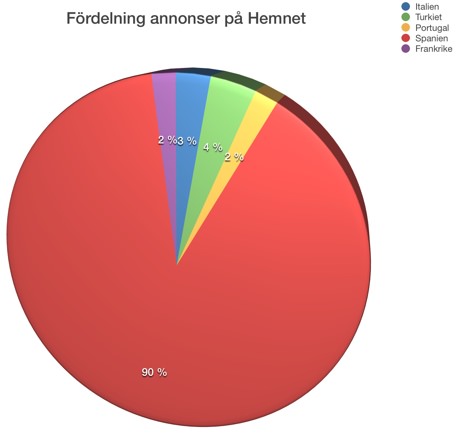
- Spain has many factors on its side. They have a modern infrastructure, with modern motorways, hyperfast trains, and a well-developed healthcare system. The country has also been considered, for some time now, to be the world's safest tourist destination. Above all, Spain has soft factors that can never be taken away from them. It has its rich history and culture, its food, the ever-present sun, the varied nature, the sea and its long coastlines. Spain is the world's third largest tourist country, and tourism is in a strong expansion phase and perhaps most exciting for investors is that the country is attracting an increasingly wealthy international tourism which you haven't really had before.
- Housing prices fell by almost 50% during the crisis years. They have since slowly recovered and will reach new heights by 2030. However, we cannot emphasize enough how the big problem right now is NOT price increases, but the lack of attractive housing in truly attractive areas. In some areas, it is pointless to discuss price increases as there is hardly anything left to buy at all.
- If you need a loan for your Spanish home purchase, you can borrow up to 70% from a Spanish bank. However, keep in mind that in practice you need 40% in equity capital as you are not allowed to borrow for taxes etc. You can get loan promise online, if you apply through us, before you come down. However, the bank wants to know in general terms what type of home you want to buy, where you are going to buy it, and how much you want to borrow. They also want a clear timeline: when you are going down to look at homes, when you plan to make the purchase.
- To ensure that you are making a safe investment, study the rental history in the area (in both the town and the residential neighborhood, preferably the individual history of the home, although this is rarely a possibility).
- Homes that perform best in the rental market are those that are located within a 60-minute drive from the airport, that have a terrace/balcony and access to a nearby pool, that are in pristine condition – preferably with sea view . It is especially important that the home is not located on a busy main road. Details such as interior design, furniture, A/C, washing machine, etc. are also important.
- However, a much more important aspect is the geographical location Costa del Sol in particular has a very high occupancy rate , which is also only growing every year and is increasingly oriented towards the exclusive. The best occupancy rate , due to several different factors, is on the eastern Costa del Sol, in Nerja (42-48+ week occupancy rate). The capital of Costa del Sol, Malaga, also has a strong growing occupancy rate and is believed by most to be one of Europe's major "Weekend cities". The Costa Blanca is also a growth area, although it does not yet have a high year-round occupancy rate . This is mainly due to Torrevieja (22-25 week occupancy rate ) which attracts tourists, at least to a certain extent, even during the low season.
- The Canary Islands, Mallorca and Barcelona do have a strong tourism industry. However, the opportunities to make a good rental investment are limited, or in some cases completely blocked, by restrictions. If you do not follow the law, the fines can be very high. Note, however, that it is possible to buy homes with approved tourist licenses in Barcelona. In addition, not all nearby regions are as tightly regulated, such as the trendy resort of Sitges.
- Most popular holiday areas in Spain have a good occupancy rate during the high season. On average, according to several analysts, you can expect an occupancy rate of 15 weeks per year. Just renting out your home during In most cases, the high season provides a higher income than long-term rentals. Also note that some areas, even if they have strong tourism overall, may be more or less impossible to rent out your home in. As mentioned: study the history carefully and choose a player who has established channels to market your home in.
- There is different rental models if you don't want to handle marketing etc. yourself. The custom is that the rental company takes 20-25% of the revenue (10-15% if you bring the customer yourself). A hybrid model, where you bring some customers yourself (via marketing or your circle of friends), is becoming increasingly common. Far from all areas in Spain have well-functioning rental companies. You should also consider this if you are not prepared to handle everything yourself, such as arranging a cleaning company, security guards, a solution for key collection, a payment solution, marketing etc.
- Unfortunately, many agents claim that they will help with your rental and that it is “no problem. We will fix it.” Then nothing happens. Check out their rental business BEFORE you buy through them (and what alternatives are available in the area you are thinking of buying). Ask them to show you statistics from Google on how many unique visitors they have per week, ask them to explain which portals, national and international, they advertise on. Ask them to present a plan for how best to market your property. Most agents do not have exclusive rights to properties for sale in Spain, so you need don't feel tied down to a broker who cannot meet all your requirements, both before and after the purchase.
We can help you with this if you want to invest in Spain
We do not scan the market for, for example, cheap bank repossession that we know will not work in the rental market. Our partners (lawyers, banks, developers, local Spanish estate agents, etc.) also know that we are not interested in the “cheapest holiday homes” possible. They therefore send us what they consider to be good investments, housing with the numbers on its side. Of course, upon request, we can find what we consider to be a really cheap, simple, but nice home for you. But we must be clear that there is a big difference between a "good investment" compared to "as cheap a home in the sun as possible".
We ensure that:
Help you:
- to find best home for rent (We analyze figures from our subsidiary site, partner subsidiary sites, etc.) Together with the manager of each rental company, we can, if there are no documented figures, make a qualified estimate of what income you can expect to generate from your property.
- to find the right lawyer. Our corporate lawyer also works with housing-related disputes. He is very well-known and respected, and comes from a family that has been lawyers for several generations and thus has a completely unique network of contacts. He also helps us find special investments, such as B&Bs, smaller hotels, commercial plots , etc. Most of the work is done through lawyer contacts regarding these purchases.
- to get loan in Spanish bank, and a possible loan promise before you come down (as well as a Swedish-speaking bank manager, which means you don't need to translate all documents with an authorized Spanish translator).
- to comply with all laws and regulations which applies in the region (note, we cannot help in all Spanish provinces, but this is something serious rental companies should be able to help with) for renting out where you bought your home.
- with all the usual after-sales service, such as water and electricity supplier, community registration, property tax, etc.
- to find rental companies who takes care of everything, or some parts, such as key handover, cleaning, marketing, booking and payment. There are several options for how to set this up.
- with advertising of individual homes for rent in our store at Blocket, and possibly directly on our website, on our Facebookchannel (also via paid Facebookads), sister pages and so on.
- If time permits, our marketing manager can help with: create and market a website for you (at a heavily discounted price compared to if you turn to a web agency) with the market's most affordable and flexible booking system for rentals, (which we use ourselves) as well as methods for being highly visible in Google etc.
- to find good construction company for renovation (By the way, you know that it is still possible to make Swedish tax deductions for your Spanish home). The managers of the rental companies are happy to offer their opinions on how best to renovate to get the best occupancy rate possible. It is also in their interest that you can rent it out to the maximum.
- with proven strategies from our most successful clients who have chosen to do everything on their own, a blueprint for which national and international portals work best (you only need a couple) and how to get the price on various ancillary services, and other things you should consider if you rent out your home entirely on your own.
- We can also offer advice on other aspects such as insurance and payment solutions.
- We are involved from start to finish throughout the entire purchasing process, and we make sure to help translate everything into Swedish, etc.
- Write to info@spanskafastigheter.se or spanienkontoret@spanskafastigheter.se Phone number to our head realtor Anders Larsson: 0034 669 738 682
Please follow our Facebookpage where we publish all our newsletters, individual listing of special interest, news that concerns investors, etc.
Contact us and links to all of our newsletters.
Read also:
- About spanishproperties.se
- Bank Repossession in Spain
- Rent a villa or apartment in Spain - tips for short-term accommodation and long stays, etc.
- Frequently asked questions and answers about buying a home in Spain (purchase process, annual taxes and fees etc.)
- Rent a car in Spain, the best companies, and what you should consider
- Guides to different areas in Spain which are of more or less interest to investors
- Tips for flying cheap to Spain
- Get a loan promise from a Spanish bank via online application – here's how it works
Contact us: info@spanskafastigheter.se